


Wasp & Bee Removal in St. Louis
Stinging insects are one of the most common warm-season calls we receive. Whether it is a paper wasp nest under your eaves or a yellow jacket colony buried in your yard, Roberts Pest Control provides safe, same-week removal to protect your family. We identify the species, apply targeted treatment, and remove the nest so the problem does not return.
Stinging Insects We Handle in St. Louis
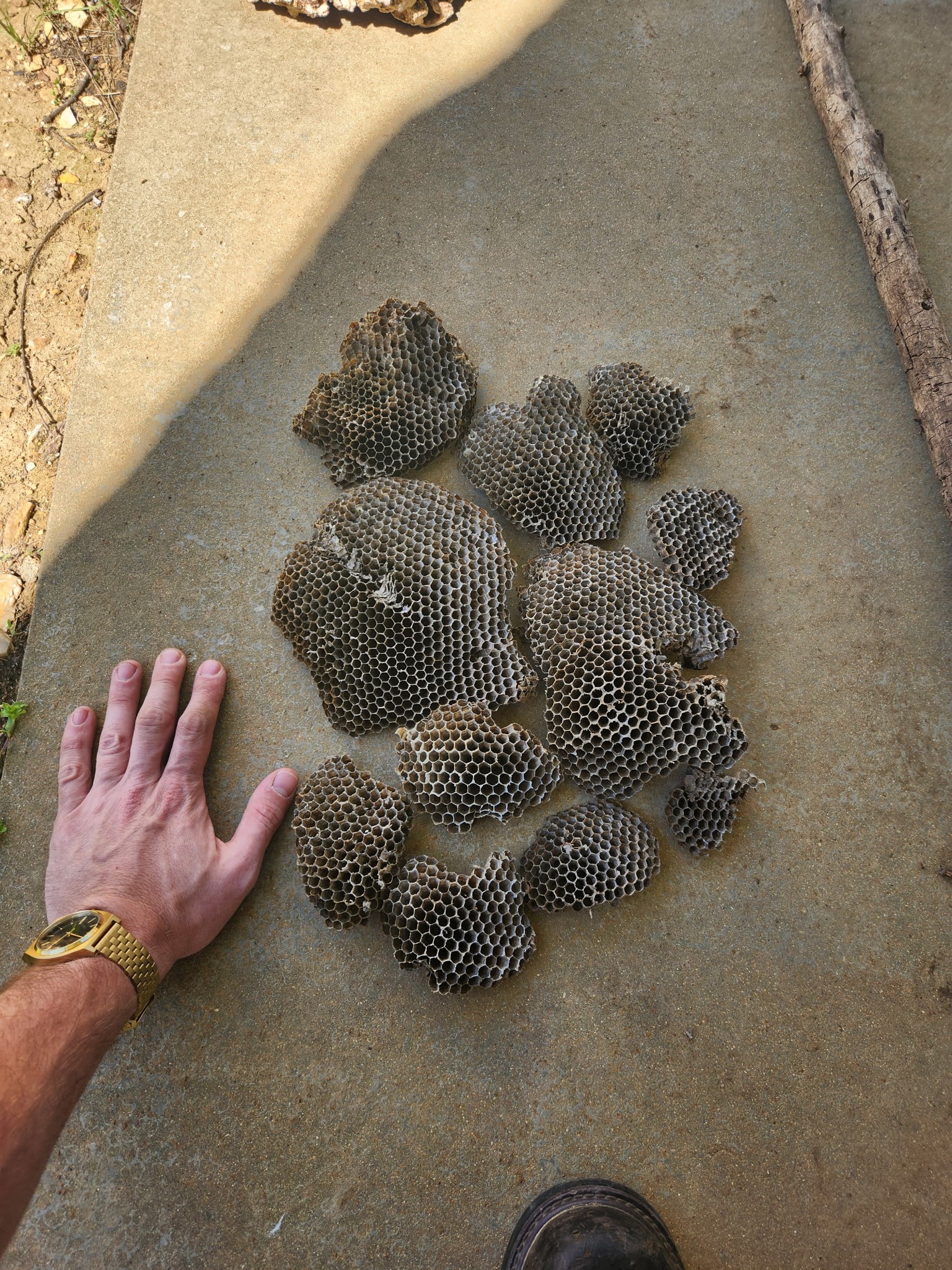
Paper Wasps
Paper wasps build open, umbrella-shaped nests under eaves, porch ceilings, deck railings, and playground equipment. They are semi-aggressive and will sting if they feel their nest is threatened. Nests are typically small early in the season but can grow to hold dozens of workers by midsummer.
Yellow Jackets
Yellow jackets are the most aggressive stinging insect in the St. Louis region. They build large colonies underground, inside wall voids, or in other enclosed spaces. Because their nests are often hidden, people accidentally step on or disturb them while mowing, gardening, or playing in the yard. When a colony is disturbed, yellow jackets attack in large numbers and can sting repeatedly. This makes them especially dangerous for children, pets, and anyone with allergies.
Mud Daubers
Mud daubers are solitary wasps that build tube-shaped mud nests on walls, under overhangs, and in garages. They are generally not aggressive and rarely sting humans. However, their nests are unsightly, and old mud dauber nests can be taken over by more aggressive species.
Carpenter Bees
Carpenter bees drill perfectly round, half-inch holes into wood surfaces such as fascia boards, deck rails, and pergolas. While the males are territorial and will hover near your face, they cannot sting. The females can sting but rarely do. The real damage is structural, as carpenter bees tunnel galleries inside wood that weaken the material over time and attract woodpeckers.
Hornets
Bald-faced hornets and European hornets both occur in Missouri. Bald-faced hornets build large, enclosed paper nests in trees and on structures. European hornets are attracted to lights at night. Both species deliver painful stings and will aggressively defend their nests.
Dangers of Stinging Insects
Each year in the United States, stinging insects send over 500,000 people to the emergency room. The primary risks include:
- Severe allergic reactions (anaphylaxis) that can be life-threatening, even in people with no prior history of allergy
- Multiple stings from disturbed nests, especially yellow jacket colonies that contain thousands of workers
- Accidental ground-nest encounters when mowing or walking barefoot in the yard
Why You Should Not DIY Wasp Removal
Spraying a wasp or yellow jacket nest with a can of aerosol is one of the most dangerous pest control actions a homeowner can take. Disturbing a colony triggers a mass defense response, with hundreds of workers pouring out of the nest to sting. Yellow jacket ground nests are especially hazardous because the entrance is often not directly over the nest, making spray ineffective while provoking attack. Let a licensed professional handle the removal safely.
Our Removal Process
- Species Identification: We identify the exact species, since treatment strategies differ significantly between paper wasps, yellow jackets, and carpenter bees.
- Treatment at Dusk: We treat nests at dusk when all workers have returned to the nest, ensuring maximum effectiveness and minimal risk of stings.
- Nest Removal: After treatment, we remove the nest to prevent re-colonization and eliminate visual attractants for new queens.
- Entry Point Sealing: For nests inside wall voids or soffits, we seal entry points to prevent future colonies from establishing in the same location.
When to Call a Professional
Contact Roberts Pest Control immediately if:
- The nest is larger than a golf ball
- The nest is near a doorway, porch, play area, or high-traffic zone
- Anyone in your household has a known allergy to stings
- You see wasps entering and exiting a hole in the ground or a gap in your siding
Seasonal Activity in St. Louis
Stinging insect activity in the St. Louis metro peaks from June through September. Queens emerge in spring to start new colonies, which reach maximum size by late summer. This is when nests are largest and stinging incidents are most common. Early-season treatment when nests are small is always safer, faster, and more affordable.
Need a Nest Removed?
Safe, professional wasp and bee removal. Same-week service available.
636-243-0900 Request a Free Quote