


Spider Control & Brown Recluse Removal in St. Louis
Missouri ranks among the top states in the country for brown recluse populations. If you live in the St. Louis metro area, professional spider control is not a luxury — it is a necessity. Roberts Pest Control delivers thorough inspections, targeted treatments, and ongoing protection to keep your home and family safe from dangerous spiders.
Dangerous & Common Spiders in St. Louis
Not every spider you see in your home is a threat, but in the St. Louis region the stakes are higher than most places. Missouri sits squarely in the heart of brown recluse territory, and knowing which spiders to watch for is the first step toward protecting your household. Here are the four species our technicians encounter most often in local homes.
Brown Recluse
The single most medically significant spider in the St. Louis area. Identifiable by the dark violin-shaped marking on its back and six eyes arranged in three pairs. Brown recluse spiders are reclusive by nature and prefer dark, undisturbed spaces — closets, basements, attics, and cardboard boxes are prime habitat. Their bites can cause necrotic lesions that destroy tissue and require medical attention. If you suspect a brown recluse population in your home, professional treatment is essential.
Black Widow
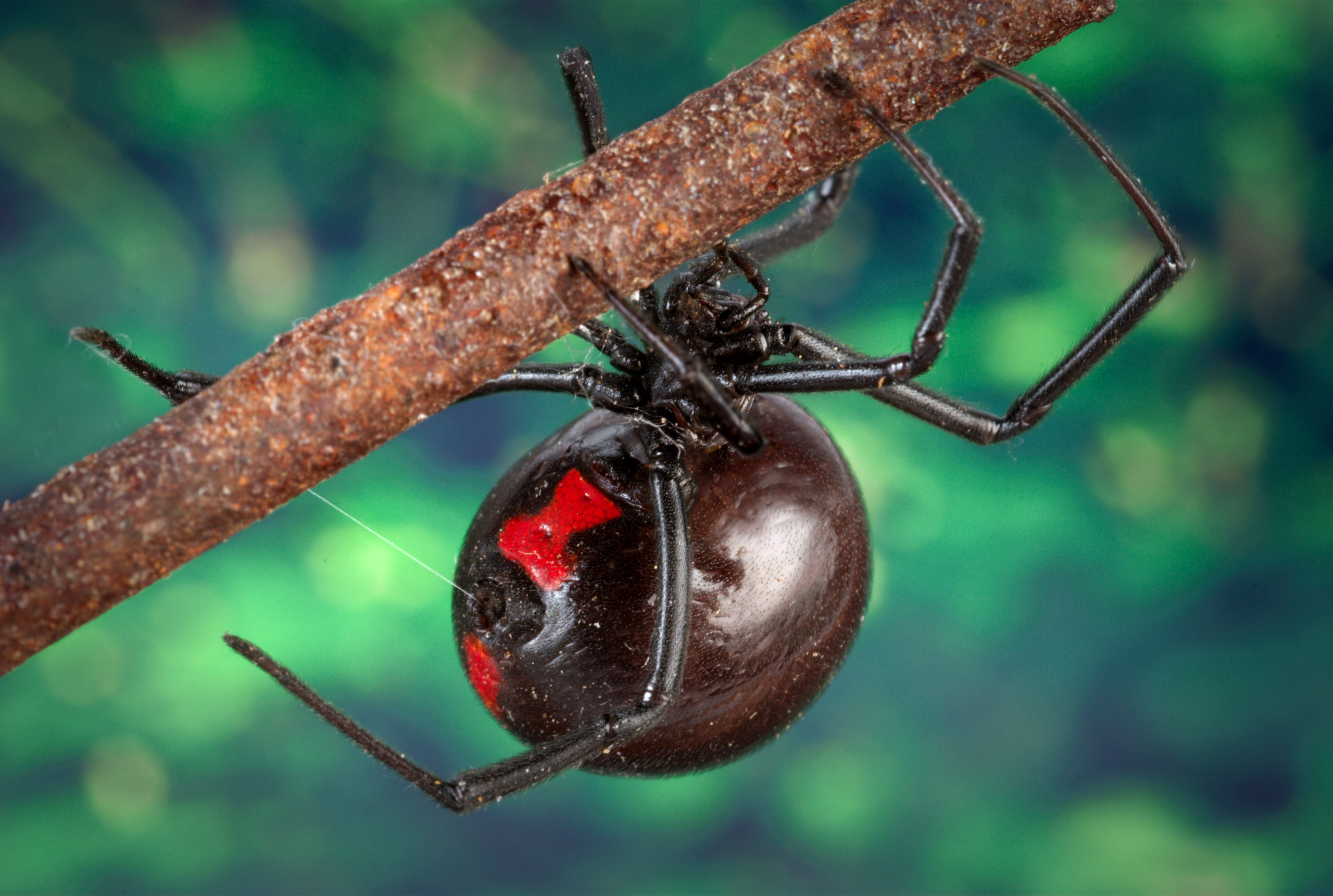
Recognizable by the iconic red hourglass marking on the underside of the abdomen. Black widows are less common in St. Louis than brown recluses but are occasionally found in garages, sheds, woodpiles, and crawl spaces. Their venom is a neurotoxin that can cause severe pain, muscle cramps, and in rare cases serious medical complications. Bites require immediate medical attention.
Wolf Spider
Large, hairy, and fast — wolf spiders are one of the most startling spiders homeowners encounter. They can reach up to two inches in body length and often run across floors at night. Despite their intimidating appearance, wolf spiders are not medically dangerous. They do not build webs and instead hunt their prey on foot. Their bite is comparable to a bee sting. They are a nuisance but not a health threat.
Common House Spider
The most frequently seen spider in St. Louis homes. These small, tan or brown spiders build messy cobwebs in corners, window frames, and basements. They are completely harmless to humans and actually help control other insect populations. That said, heavy infestations create unsightly webs throughout your home and may indicate a larger pest problem attracting them indoors.
Learn more about local pests in our Pest Library, including our detailed page on spiders in Missouri.
Signs You Have a Spider Problem
Spiders are secretive creatures. A single sighting does not always indicate an infestation, but several of these signs together should prompt a professional inspection.
Cobwebs accumulating faster than you can remove them — especially in basements, garages, and attics — indicate an active and growing spider population.
Small, round, silk-wrapped egg sacs attached to webs or hidden in dark crevices. Each sac can contain hundreds of spiderlings. Finding even one egg sac means a breeding population is established.
Seeing spiders regularly — especially during daytime — suggests the population has grown large enough that competition for hiding spots is pushing them into the open.
Spiders molt as they grow. Finding translucent shed skins in closets, along baseboards, or in storage areas is a reliable indicator of an established infestation.
Waking up with small, red, swollen bites — particularly bites that blister or develop a dark center — may indicate brown recluse activity. Seek medical attention for any bite that worsens over 24 to 48 hours.
Brown Recluse: St. Louis’s Most Dangerous Spider
Where Brown Recluses Hide
Brown recluse spiders earned their name honestly. They are masters of concealment and prefer dark, dry, undisturbed areas. In St. Louis homes, our technicians consistently find them in the following locations:
Why They Are Dangerous
The brown recluse carries a cytotoxic venom that destroys skin and tissue at the bite site. While most bites cause mild redness and swelling, a significant percentage develop into necrotic wounds that can take weeks or months to heal and may leave permanent scarring. Children, the elderly, and immunocompromised individuals are at higher risk for severe reactions. In rare cases, systemic reactions including fever, joint pain, and hemolytic anemia can occur.
What to Do If You Are Bitten
If you suspect a brown recluse bite, clean the area with soap and water, apply a cold compress, and seek medical attention promptly. If possible, capture or photograph the spider for identification. Do not apply heat, cut the wound, or attempt to suck out venom. Early medical treatment dramatically improves outcomes.
Why Professional Treatment Is Essential
Brown recluse spiders are notoriously resistant to many over-the-counter sprays and DIY treatments. Their reclusive behavior means they rarely cross treated surfaces, and their populations can thrive inside walls, in attic insulation, and in other voids that store-bought products simply cannot reach. Professional pest control utilizes targeted residual products, dust formulations for wall voids, and strategic glue board monitoring to systematically reduce populations over time. A single treatment is rarely enough — effective brown recluse control requires a sustained, multi-visit approach.
Read more in our in-depth guide: Brown Recluse & Black Widow Spiders in Missouri.
Our Spider Treatment Process
Roberts Pest Control uses a proven, multi-step approach to eliminate spiders and prevent them from returning. Every treatment is tailored to the specific conditions of your home.
-
Thorough Inspection
We examine your entire home — interior and exterior — to identify spider species present, locate active populations, find entry points, and assess conditions attracting spiders. We pay special attention to attics, crawl spaces, basements, and closets where brown recluses are most likely to hide. -
Web & Egg Sac Removal
Our technicians physically remove all visible webs, cobwebs, and egg sacs from your home. This eliminates existing egg sacs before they hatch and removes the webs spiders use to catch prey, forcing them to relocate into treated areas. -
Targeted Interior Treatment
We apply residual products to cracks, crevices, baseboards, closets, and other spider harboring areas. For brown recluse infestations, we use professional-grade dust formulations in wall voids, attic spaces, and other inaccessible areas where recluses nest and breed. -
Exterior Barrier Treatment
A perimeter treatment around your home’s foundation, doorways, windows, eaves, and utility entry points creates a protective barrier that intercepts spiders before they get inside. We also treat common outdoor harboring areas like woodpiles, landscaping, and outbuildings. -
Ongoing Monitoring & Prevention
We place professional glue board monitors in key locations to track spider activity over time. Regular follow-up visits allow us to assess the effectiveness of treatment, reapply products as needed, and maintain your home’s protective barrier throughout the year.
Spider Prevention Tips for Homeowners
Professional treatment is the most effective way to control spiders, but these simple steps will help reduce spider activity between service visits.
Inspect your home’s exterior for gaps around doors, windows, utility lines, and the foundation. Seal openings with caulk or weatherstripping. Even small gaps provide easy entry for spiders and the insects they feed on.
Clutter provides countless hiding spots for spiders, especially brown recluses. Replace cardboard storage boxes with sealed plastic bins. Keep closets, basements, attics, and garages organized and free of piled items.
Place glue board traps along walls in basements, closets, and garages. These traps help you monitor spider activity levels and catch spiders as they travel. Check and replace traps monthly.
Pull beds a few inches away from the wall and avoid letting bedding touch the floor. This simple step reduces the chance of brown recluses climbing into your bed at night — a common route for nighttime bites.
Always shake out shoes, boots, gloves, and clothing that have been stored or left sitting on the floor. Brown recluses frequently hide inside footwear and folded garments, and disturbing them is a leading cause of bites.
Outdoor lights attract flying insects, which in turn attract spiders. Switch exterior lights to yellow or sodium vapor bulbs, or move lights away from doorways. Fewer insects near entry points means fewer spiders following them inside.
Get Rid of Spiders — For Good
Do not wait for a bite to take action. Whether you have spotted a brown recluse, found webs throughout your home, or simply want peace of mind, Roberts Pest Control is here to help. We serve the entire St. Louis metro area including Jefferson County, St. Charles County, and surrounding communities.
(636) 243-0900 Or request a free quote online →