


Wildlife Removal & Exclusion
Raccoons, squirrels, bats, skunks, opossums, and groundhogs — St. Louis wildlife regularly invades attics, crawl spaces, and yards. Licensed NWCO for humane removal and professional exclusion.
Get a Free Estimate (314) 967-2847 (BUGS)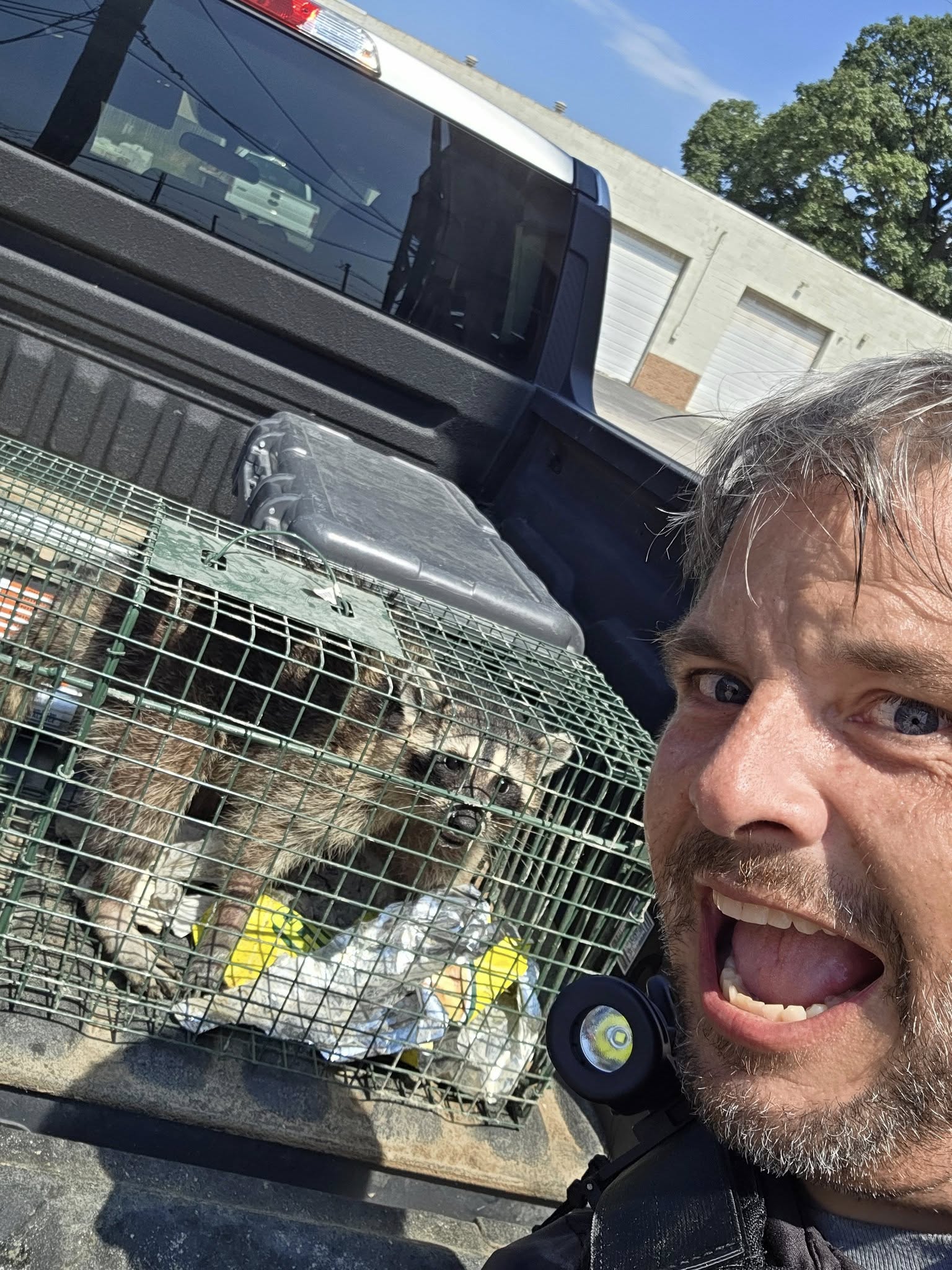


Common Wildlife in St. Louis
Raccoons
Powerful, intelligent, and persistent. They can peel back soffits, rip apart roof decking, and cause significant structural damage when denning in attics or chimneys. Their droppings (latrines) can harbor raccoon roundworm, a serious health hazard.
Squirrels
The most common attic invader in our service area. They chew through soffits, fascia, and roof returns to nest inside. Squirrels will gnaw on electrical wiring, which creates a serious fire hazard. They are active year-round and can have two litters per year.
Bats
Bats roost in attics, wall voids, and soffits. A colony can contain dozens to hundreds of bats. Their droppings (guano) accumulate rapidly and can cause histoplasmosis, a serious respiratory disease. Bat exclusion is regulated by Missouri law and must be timed correctly.
Skunks
Den under decks, porches, and sheds. Beyond the obvious odor concern, skunks can carry rabies and their digging damages landscaping. They are most active at dusk and dawn.
Opossums
North America’s only marsupial. Commonly found under decks, porches, and in crawl spaces. Generally less destructive than raccoons or squirrels, but they carry fleas and can spread leptospirosis.
Groundhogs
Also called woodchucks. They dig extensive burrow systems under sheds, decks, and foundations. Their tunneling can undermine structures and create tripping hazards in yards.
Birds
Starlings, sparrows, and pigeons nest in vents, soffits, and eaves. Their droppings are corrosive and can carry histoplasmosis. Nesting material in dryer vents and bathroom exhaust fans is a fire hazard.
Signs of Wildlife
- Noises — Scratching, scurrying, or thumping sounds in walls, ceilings, or attics, especially at dawn, dusk, or night
- Droppings — On the roof, in the attic, under decks, or in the crawl space. Different species have distinct dropping shapes and sizes.
- Damage — Visible damage to soffits, fascia, roof returns, vent screens, or chewed wiring
- Odors — A strong, musky odor from wall voids, attic spaces, or under the house
- Entry holes — Gaps in soffits, chewed openings in fascia, or displaced vent covers
- Yard damage — Holes dug in the yard (armadillos, groundhogs, skunks), especially overnight
How Roberts Handles Wildlife
Live Trapping
Roberts uses professional Duke cage-type live traps set at strategic locations based on a thorough site inspection. We install trail cameras at trap sites to monitor activity and confirm the species. Missouri law (Wildlife Code 3 CSR 10-8.510) requires that every trap is physically checked daily — Roberts follows this requirement without exception.
One-Way Doors
For species like bats and some squirrel situations, we install one-way exclusion devices that allow animals to exit but prevent re-entry. This is the preferred method for bat exclusion and is required by law during certain seasons.
Exclusion Sealing
After trapping or exclusion is complete, we seal all entry points that wildlife used to access your structure. Trapping without exclusion just creates a vacancy for the next animal. We seal soffits, roof returns, gable vents, foundation openings, and any other access points with materials designed to withstand animal pressure.
Important: Roberts does NOT do moles. Our owner’s position is that there is no reliable, effective method of mole control available. Rather than take your money for inconsistent results, we choose to be honest.
Bat Exclusion
Bats are protected in Missouri and require specialized handling. Our bat exclusion program follows all Missouri Department of Conservation regulations.
Seasonal Timing
Bat exclusion in Missouri can only be performed during specific windows. Exclusion is prohibited from May 15 through August 15 when flightless pups may be present in the colony. Excluding adult bats during this period would trap pups inside, where they die and create a major odor and sanitation problem.
One-Way Devices
We install one-way exclusion devices at all active entry points. Bats can exit through these devices at dusk to feed but cannot re-enter. After all bats have departed (typically 7-10 days), we permanently seal all entry points.
Legal Considerations
Several bat species in Missouri are state or federally listed. Roberts is fully licensed and follows all regulations regarding bat handling and exclusion. We will not perform exclusion during prohibited periods regardless of the inconvenience.
Licensed NWCO
Fully licensed and permitted for nuisance wildlife control in Missouri
Humane Methods
Live traps and one-way exclusion devices — safe removal and relocation when permitted
Entry Point Sealing
Professional exclusion prevents re-entry after removal
Damage Documentation
We document all wildlife damage for insurance purposes
Hearing noises in your attic? Don’t wait — wildlife damage gets worse every day. Call for a free inspection.
Call (314) 967-2847 (BUGS)Why Choose Roberts?
- Licensed and Permitted — NWCO licensed through the Missouri Department of Conservation — fully legal operation
- Humane and Effective — Live traps, one-way devices, and daily trap checks in full compliance with Missouri law
- Exclusion Included — We don't just remove the animal — we seal the entry points to prevent return
- Trail Camera Monitoring — We verify species and activity with cameras before and during trapping
What to Expect
- Free Inspection We identify the species, locate entry points, and assess damage.
- Trapping or Exclusion Live traps with daily checks, or one-way exclusion devices as appropriate.
- Animal Removal Humane removal and handling in compliance with Missouri regulations.
- Exclusion Sealing All entry points sealed with animal-resistant materials to prevent re-entry.
- Damage Documentation We document all damage for your records and insurance purposes.
Service Area
- Jefferson County (Festus, Crystal City, Arnold, Imperial, Barnhart, High Ridge)
- St. Louis County (South County, Mehlville, Oakville, Affton, Kirkwood)
- St. Charles County (St. Charles, O'Fallon, St. Peters, Wentzville)
- St. Francois County (Farmington, Park Hills, Bonne Terre)
- City of St. Louis and surrounding municipalities
Schedule Your Free Estimate
Fill out the form below and we’ll get back to you fast — usually same day.
Frequently Asked Questions
I have raccoons in my attic. What should I do?
Do not attempt to trap or remove raccoons yourself. They are strong, can be aggressive when cornered, and their droppings may contain raccoon roundworm. Call us for a professional inspection. We’ll set live traps, monitor with trail cameras, and seal the entry points after removal to prevent return.
When can bats be excluded from my home?
Bat exclusion in Missouri is prohibited from May 15 through August 15 when flightless pups may be present. Outside of this window, we install one-way exclusion devices that allow bats to leave but prevent re-entry. The process typically takes 7-10 days before permanent sealing can be completed.
How much does wildlife removal cost?
Every wildlife situation is different. Pricing depends on the species, location (ground-level vs. roof/attic), and scope of the job. Roof and attic jobs are custom-quoted after an on-site assessment. Exclusion sealing is quoted separately based on the number and size of entry points. Call (314) 967-2847 for a free assessment.
What should I do if I find wildlife in my house?
If the animal is in a living space (not the attic), close off the room, open an exterior door or window, and give it an escape route. Do not corner or attempt to handle the animal. If it’s a bat, do not touch it — bats can carry rabies. Call us or your local animal control for assistance.
Is wildlife removal legal in Missouri?
Yes, but it requires proper licensing. Roberts holds a MDA-3 nuisance wildlife control operator license and 7a/7b trapping permits from the Missouri Department of Conservation. All trapping and handling is performed in compliance with Wildlife Code 3 CSR 10-8.510, including mandatory daily trap checks.