



Rodent Control — Mice & Rat Prevention
Rodent Control & Mice & Rat Prevention
A single mouse can squeeze through a gap the size of a dime and produce up to 60 offspring per year. Professional exclusion is the only way to permanently solve a rodent problem — traps alone won’t cut it.
Licensed & Insured
Prompt Scheduling
We Stand Behind Our Work
Free Quotes
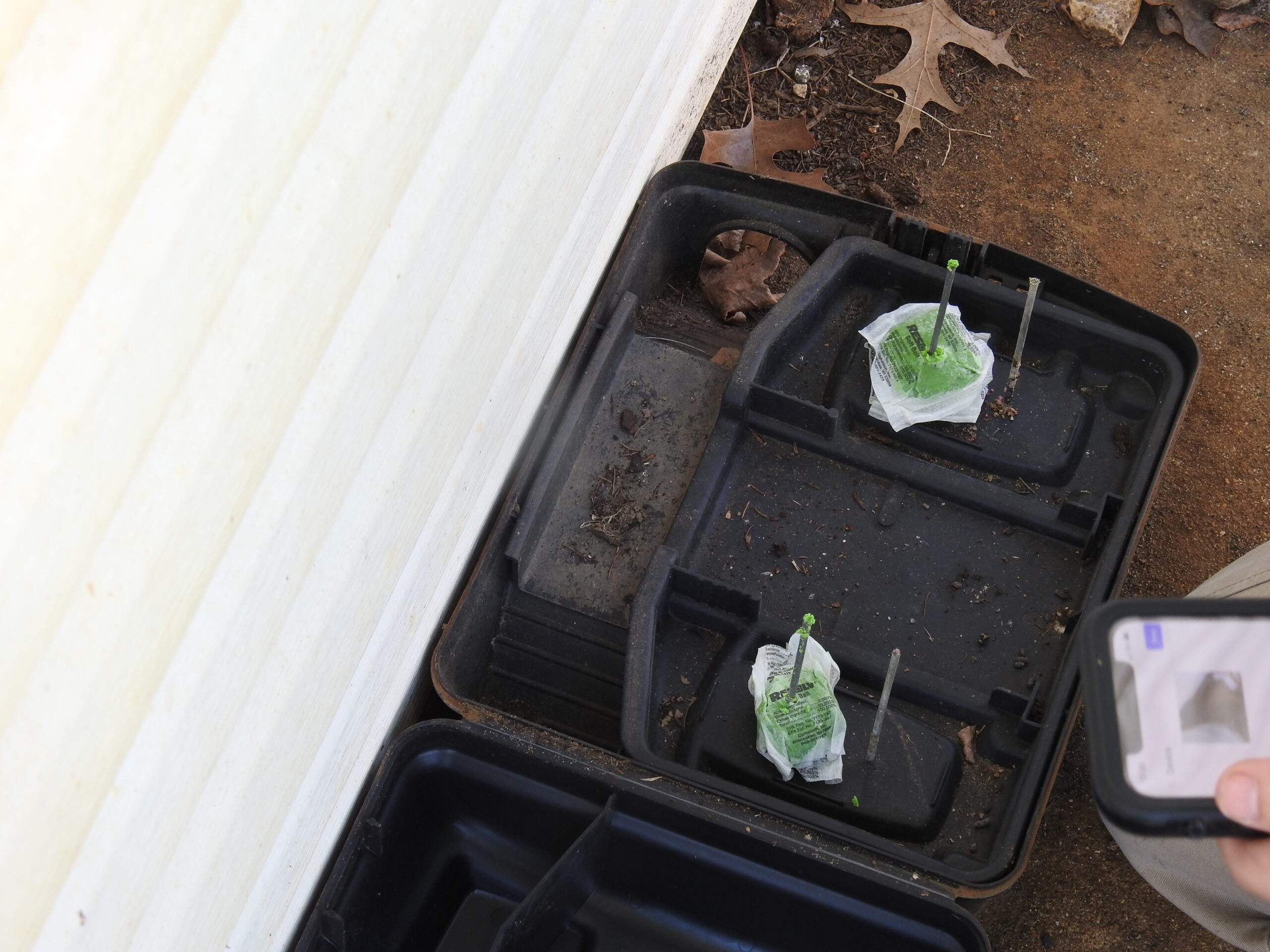
Common Rodents in St. Louis
Rodents are the most destructive pests that can invade your home. They contaminate food, gnaw through wiring, and spread disease. Knowing which species you’re dealing with determines the right approach.

House Mouse
Small, 2–3 inches body with gray-brown fur, large ears, and a pointed snout. Droppings are rod-shaped, about 1/4 inch long. Nests in wall voids, insulation, and stored items. Extremely prolific — a single pair can produce dozens of offspring in one year.

Norway Rat
Large, 7–10 inches body with brown/gray coarse fur, a blunt snout, small ears, and a thick tail shorter than its body. Droppings are capsule-shaped, about 3/4 inch long. Burrows along foundations and under concrete slabs. Aggressive and highly destructive.
Signs You Have a Rodent Problem
Rodents are nocturnal and avoid open areas. By the time you see one during the day, the population is likely much larger than you think. Watch for these indicators.
Mouse droppings are small and rice-grain shaped. Rat droppings are larger and capsule-shaped. Fresh droppings are dark and moist; old ones are gray and crumbly.
Teeth marks on wood, wires, and food packaging. Rodents must gnaw constantly to keep their teeth worn down. Gnawed wiring is a serious fire hazard.
Noises in walls, ceilings, or attics — especially at night. Scratching, scurrying, and squeaking are telltale signs of an active infestation.
Rodents follow the same paths repeatedly, leaving dark, greasy rub marks along walls and baseboards from the oils in their fur.
Shredded paper, insulation, fabric, or other soft materials gathered into hidden nests in wall voids, attics, or behind appliances.
A strong, ammonia-like smell — especially in enclosed areas like cabinets, closets, and attics. The odor intensifies as the population grows.
Professional Rodent Control — 5 Steps
Effective rodent control requires more than traps. Our proven process eliminates the current population and prevents re-entry.
- Inspection & Entry Point Assessment — We thoroughly inspect your home inside and out to identify how rodents are getting in — gaps, cracks, pipe penetrations, garage doors, and soffit vents.
- Strategic Trapping — Professional trap placement in high-activity areas for maximum effectiveness. We use the right trap type and placement based on species and behavior patterns.
- Exterior Bait Stations — Tamper-resistant bait stations installed around the perimeter. Inaccessible to children and pets, these stations reduce the exterior population pressing against your home.
- Exclusion Sealing — We seal ALL entry points — gaps, cracks, pipe penetrations, garage doors, soffit vents, and any opening larger than 1/4 inch. This is the most critical step.
- Follow-Up Monitoring — We return to verify elimination, check bait stations, inspect exclusion work, and ensure no new entry points have developed.
Why Exclusion Matters
Trapping and baiting without exclusion is like mopping the floor with the faucet running. Mice and rats will keep entering through the same gaps. Our exclusion process seals every entry point — foundation cracks, pipe penetrations, garage door gaps, soffit vents — so new rodents can’t replace the ones we remove.
Common entry points we seal:
- Foundation cracks and gaps
- Pipe and utility penetrations
- Garage door weatherstripping
- Soffit and ridge vents
- A/C line entry points
- Dryer vent covers
- Gaps around windows and doors
- Roof-to-fascia junctions
Keep Rodents Out — Homeowner Tips
Mice can squeeze through a gap the size of a dime. Inspect your foundation, siding, and roofline for any openings and seal with steel wool, caulk, or metal flashing.
Gaps under exterior doors are a highway for rodents. Install tight-fitting door sweeps on all entry doors, including the garage.
Transfer pantry items from cardboard and bags into hard-sided, airtight containers. This removes the food source that attracts and sustains rodent populations.
Use trash cans with tight-fitting lids, both indoors and outdoors. Open garbage is an open invitation.
Spilled birdseed is one of the top attractants for mice and rats. Move feeders at least 20 feet from the house or remove them entirely during infestations.
Branches touching or overhanging your roof give rodents a direct path to your attic. Maintain a 4-foot clearance between trees and your roofline.
Woodpiles, debris, tall grass, and ground cover near the foundation provide shelter and nesting sites. Keep a clean, clear perimeter around your home.
Frequently Asked Questions
How do rodents get into my house?
Is bait dangerous to my pets?
How long does it take to solve a rodent problem?
Do you remove dead rodents?
Rats & Mice in the St. Louis Area
The two rats split the house between them — Norway rats stay low (basements, burrows) while roof rats own the attic and upper walls — and mice get in almost anywhere. Correct ID drives where we seal and set. The permanent fix is always exclusion (sealing gaps with ¼-in. hardware cloth) plus sanitation, not just bait.
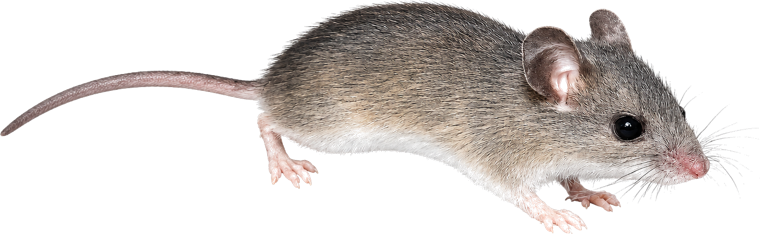
House Mouse
Mus musculus
Identify: Small and slender, just ½–1 oz., with large ears and a nearly hairless tail about as long as the head and body. Gray-brown above, lighter below.
Life cycle: Astonishingly prolific: about 4–7 pups a litter, a new litter every 3–4 weeks, and young breeding at 5–8 weeks. A small problem becomes a big one fast.
Habits & risk: A “nibbler” that nests close to food and warmth — wall voids, cabinets, and the bases of appliances — and needs almost no water. It dribbles droppings and urine across thousands of spots, and its allergens make it a genuine health pest.
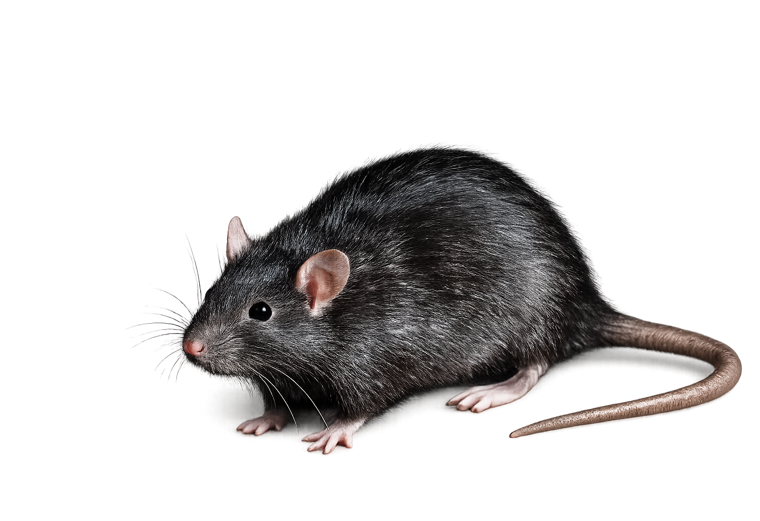
Roof Rat
Rattus rattus
Identify: Sleeker than the Norway rat, 5–9 oz., with a pointed snout, large ears, and a tail longer than its head and body combined — the key field mark.
Life cycle: Litters of about 4–8. Less cold-tolerant than the Norway rat; Truman’s notes an established roof-rat pocket in St. Louis spread by Mississippi River commerce.
Habits & risk: The climber — it lives up high in attics, soffits and upper walls and travels along wires, fences and tree limbs. Because it stays overhead and out of sight, an infestation can go unnoticed for a long time.
Identification and biology per Truman’s Scientific Guide to Pest Management Operations, Ch. 17.
Get Rodents Out — Keep Them Out
Free Quotes. Locally owned, licensed & insured.
More Pest Control Services
Rodent Control by City
Follow us on social media
Related reading from our blog
Fall Pest Prevention in St. Louis — the exclusion checklist that seals mice out before the first cold snap.