

PEST LIBRARY

Wasp & Stinging Insect Removal

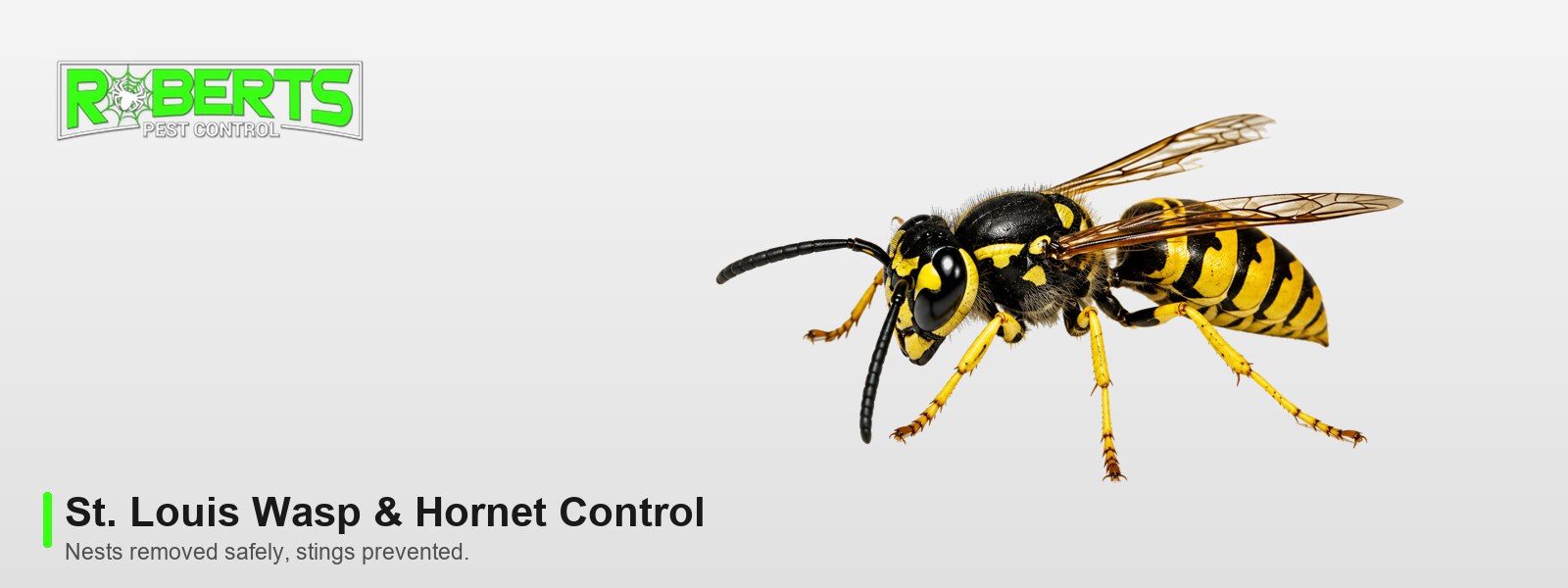
Yellow jackets, paper wasps, hornets, and mud daubers are common in St. Louis yards. Some are aggressive defenders. Learn to identify them and when professional removal is the safe choice.

Get a Free Estimate (314) 967-2847 (BUGS)
Yellow jacket nest - Roberts Pest Control
Roberts Pest Control
🏠 Locally Owned & Operated 🛡️ 20+ Years Experience Free Estimates 🤝 No Contracts Required
500K+
ER Visits/Year (US)
5+
Species in St. Louis
5,000
Yellow Jacket Colony Size
100%
Nest Removal

Stinging Insects in St. Louis

The St. Louis metro area is home to several stinging insect species that pose risks to homeowners. Understanding which species you’re dealing with determines the safest and most effective treatment approach.

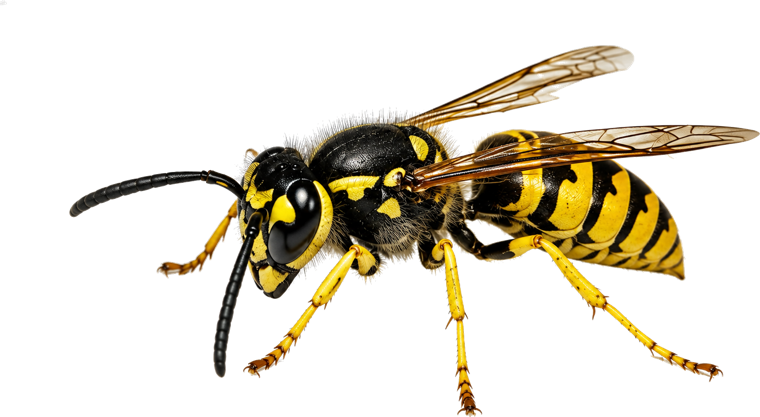
Yellow Jackets

The most aggressive stinging insect in Missouri. They build underground nests in abandoned rodent burrows and wall voids. Colonies can reach 5,000+ workers by late summer. They are attracted to food and sugary drinks at outdoor events and will sting repeatedly when disturbed.

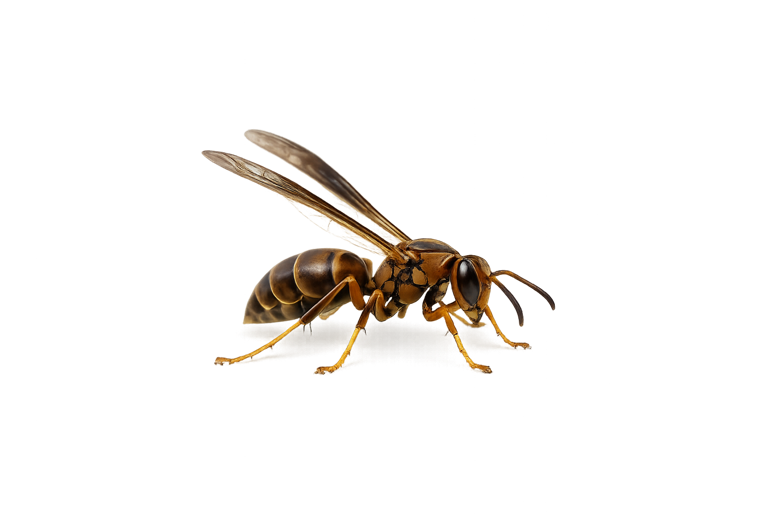
Paper Wasps

Build open, umbrella-shaped nests under eaves, porch ceilings, deck railings, and in attic vents. Nests are relatively small (usually fewer than 100 individuals). They are moderately aggressive when their nest is disturbed.

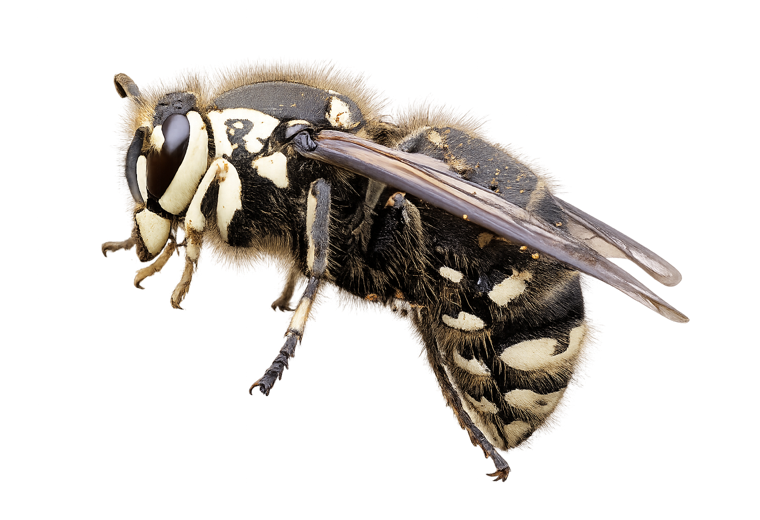
Bald-Faced Hornets

Build large, enclosed paper nests in trees, shrubs, and under roof overhangs. Extremely aggressive when their nest is approached. Colonies can contain 400+ workers.

Mud Daubers

Solitary wasps that build tube-shaped mud nests on walls, eaves, and in garages. They are not aggressive and rarely sting. However, abandoned mud dauber nests can attract other wasps looking for nesting sites.

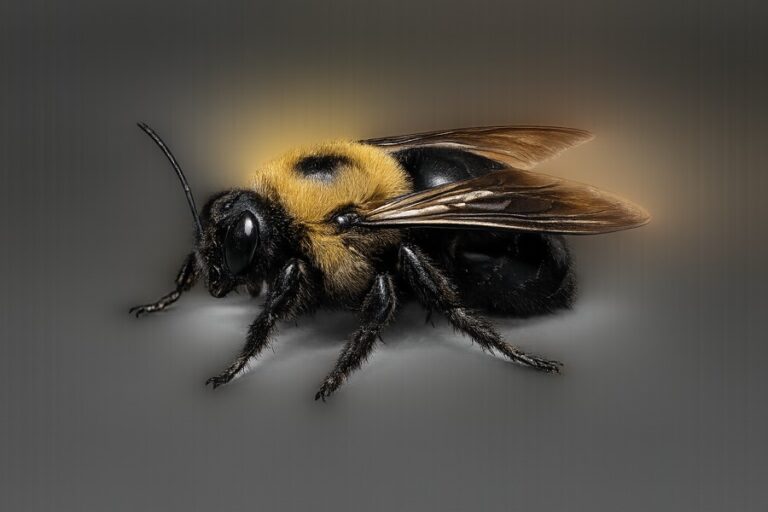
Carpenter Bees

Large, shiny black bees that drill perfectly round 1/2-inch holes into untreated wood — fascia boards, deck railings, pergolas, and siding. Males are territorial but cannot sting. The real damage is structural: galleries can extend 6-12 inches into the wood and are reused year after year.

Identifying Wasp Nests

Nest location is the first clue to species identification and determines the treatment approach.

  • Ground nests — Yellow jackets build underground in abandoned rodent burrows, under landscaping timbers, and in rock walls. You will see wasps entering and exiting a hole in the ground.
  • Aerial nests — Bald-faced hornets build large, enclosed gray paper nests in trees and shrubs, sometimes 20+ feet off the ground.
  • Eave nests — Paper wasps build open comb nests under eaves, porch ceilings, and deck railings. These are visible and exposed.
  • Void nests — Yellow jackets and paper wasps can nest inside wall voids, soffits, and attic spaces. You may see wasps entering through a gap in your siding or soffit.

Important: Do not attempt to remove or disturb any wasp nest yourself. Yellow jackets in particular will aggressively defend their nest, and underground colonies can contain thousands of workers.

How Roberts Removes Wasps

Treatment depends on the species and nest location. Roberts uses targeted methods designed for complete elimination with minimal risk.

Injectable Foam

For carpenter bees and void-nesting wasps, we use expanding foam insecticide injected directly into galleries and cavities. The foam delivers product deep into the nest and seals the entrance.

Aerosol & Direct Spray

Paper wasp nests under eaves and hornets’ nests receive a direct spray application followed by nest removal once the colony is eliminated.

Dust Treatment

Underground yellow jacket nests receive a targeted insecticidal dust application directly into the entrance hole. Dust is carried through the colony by worker movement.

Nest Removal

After the colony is eliminated, we remove the nest to prevent re-infestation and secondary pest issues. Abandoned nests can attract carpet beetles and other scavengers.

Note: Roberts Pest Control refers honey bee swarms and established honey bee colonies to local beekeepers. Honey bees are critical pollinators, and we do not exterminate them.

Prevention

  • Seal eaves and soffits — Inspect your home’s eaves, soffits, and overhangs in early spring before wasps begin nest-building. Seal gaps with caulk or hardware cloth.
  • Remove food sources — Keep trash cans sealed and clean up food and drink spills at outdoor events promptly. Yellow jackets are attracted to sugary drinks and protein sources.
  • Early season treatment — Treat common nesting sites in early spring before queen wasps establish colonies. A preventive treatment in March or April is far easier than dealing with a 5,000-worker colony in August.
  • Paint exposed wood — Carpenter bees strongly prefer untreated wood. Painting or staining fascia, decks, and railings deters them from drilling.
  • Don’t swat — Erratic movement triggers aggressive defense behavior in wasps and yellow jackets. Stay calm and move away slowly.
🧪

Injectable Foam

Expanding foam delivers product deep into nest cavities for complete elimination

🛡️

Safe Removal

Professional equipment and protective gear — don't risk DIY nest removal

🐝

All Species

Yellow jackets, paper wasps, hornets, mud daubers, carpenter bees — we handle them all

🌱

Nest Prevention

Treat common nesting sites early in spring before colonies establish

Found a wasp nest on your property? Don’t risk a sting — call Roberts for safe, professional removal.

Call (314) 967-2847 (BUGS)

Why Choose Roberts?

  • Professional Equipment — Protective suits, injectable foam systems, and aerial reach tools for safe nest removal
  • All Species Handled — Yellow jackets, paper wasps, hornets, mud daubers, and carpenter bees
  • Same-Day Service — Stinging insect calls are treated as urgent — we get there fast
  • Honest About Honey Bees — We refer honey bee issues to local beekeepers, not extermination

What to Expect

  1. Call Us Describe what you're seeing and where. We'll assess urgency over the phone.
  2. Inspection Our technician identifies the species and locates all nests on your property.
  3. Treatment Targeted treatment based on species and nest location — foam, spray, or dust.
  4. Nest Removal We remove the nest after the colony is eliminated to prevent secondary pests.

Service Area

  • Jefferson County (Festus, Crystal City, Arnold, Imperial, Barnhart, High Ridge)
  • St. Louis County (South County, Mehlville, Oakville, Affton, Kirkwood)
  • St. Charles County (St. Charles, O'Fallon, St. Peters, Wentzville)
  • St. Francois County (Farmington, Park Hills, Bonne Terre)
  • City of St. Louis and surrounding municipalities

Schedule Your Free Estimate

Fill out the form below and we’ll get back to you fast — usually same day.

Frequently Asked Questions

What should I do if I find a yellow jacket nest in my yard?

Do not disturb it. Yellow jackets are highly aggressive when their nest is threatened, and underground nests can contain thousands of workers. Keep people and pets away from the area and call a professional. Attempting to flood, burn, or pour gasoline on a nest is dangerous and ineffective.

When should I call a professional vs. handle it myself?

Small paper wasp nests (fewer than a dozen wasps) in accessible locations can sometimes be knocked down with a long-range spray at dusk. However, any underground nest, large aerial nest, void nest, or situation involving aggressive yellow jackets or hornets should be handled by a professional. The risk of multiple stings is not worth saving on a service call.

What if someone in my family is allergic to stings?

If anyone in your household has a known allergy to stinging insects, do not attempt any DIY treatment. Call us immediately. We treat allergy-risk households as priority calls and will get there as quickly as possible. In the meantime, keep everyone away from the nest area.

When is the best time of year to treat for wasps?

Early spring (March-April) is the ideal time for preventive treatment. Queen wasps are just starting to build nests and colonies are small. By mid-summer, colonies can contain thousands of workers and are much more dangerous and expensive to treat. If you had wasp problems last year, a spring preventive treatment is highly recommended.

Are carpenter bees destructive?

Yes, over time. Each gallery is 6-12 inches long, and the same holes are reused and extended year after year. Over multiple seasons, a group of carpenter bees can cause significant structural weakening in fascia boards, deck railings, and pergolas. The entry holes also invite moisture and wood-decay fungi.