



Ant Season St Louis
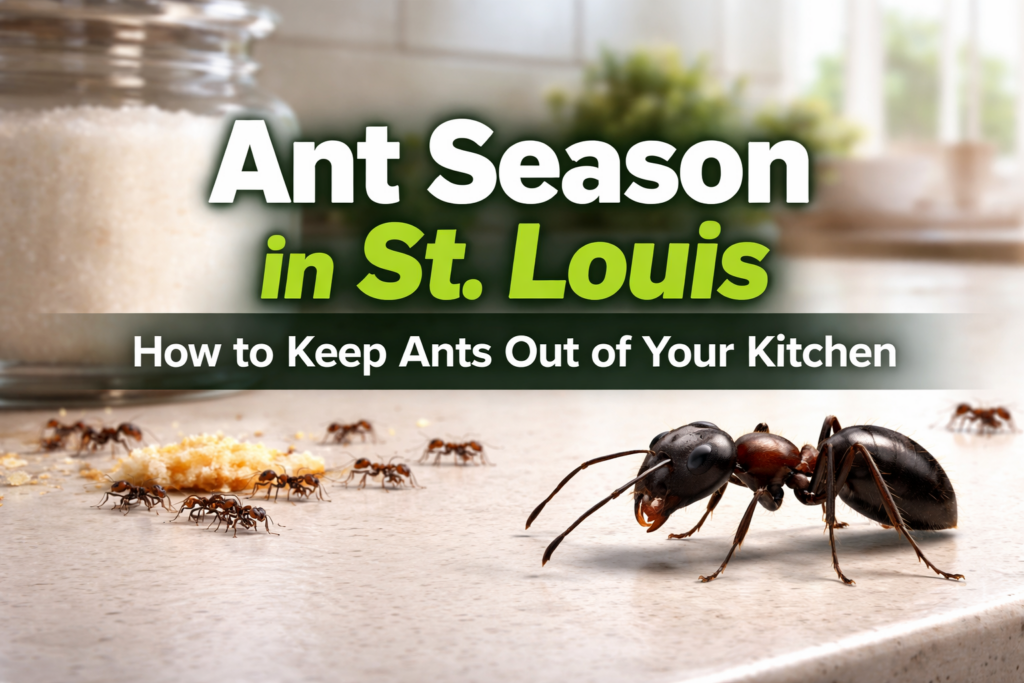
It starts with one or two ants on the kitchen counter. Then a line along the backsplash. Then they’re in the cabinets, under the sink, around the dog bowl. Welcome to ant season in St. Louis.
Ants are the most common pest complaint we receive from March through October and for good reason. The St. Louis area is home to several ant species that actively invade homes every spring. Understanding which ants you’re dealing with and why they showed up is the first step to getting rid of them for good.
Why Ants Invade in Spring 🐜
Ant colonies are driven by temperature. When soil temperatures rise above 50°F, which happens in the St. Louis area around late February to early March colonies become active and send out scout ants to locate food and water sources.
Those one or two ants on your counter aren’t random. They’re scouts. If they find food, they leave a pheromone trail that leads the rest of the colony straight to the source. Within days, a casual scout visit becomes a full invasion trail.
Here’s the timeline we see every year in St. Louis:
‣ March: Scout ants appear — a few at a time, usually in kitchens and bathrooms
‣ April: Full foraging trails establish along counters, baseboards, and under sinks
‣ May – June: Colonies are at peak size and trails are well-established. Much harder to eliminate.
Common Ant Species in the St. Louis Area
Odorous House Ants
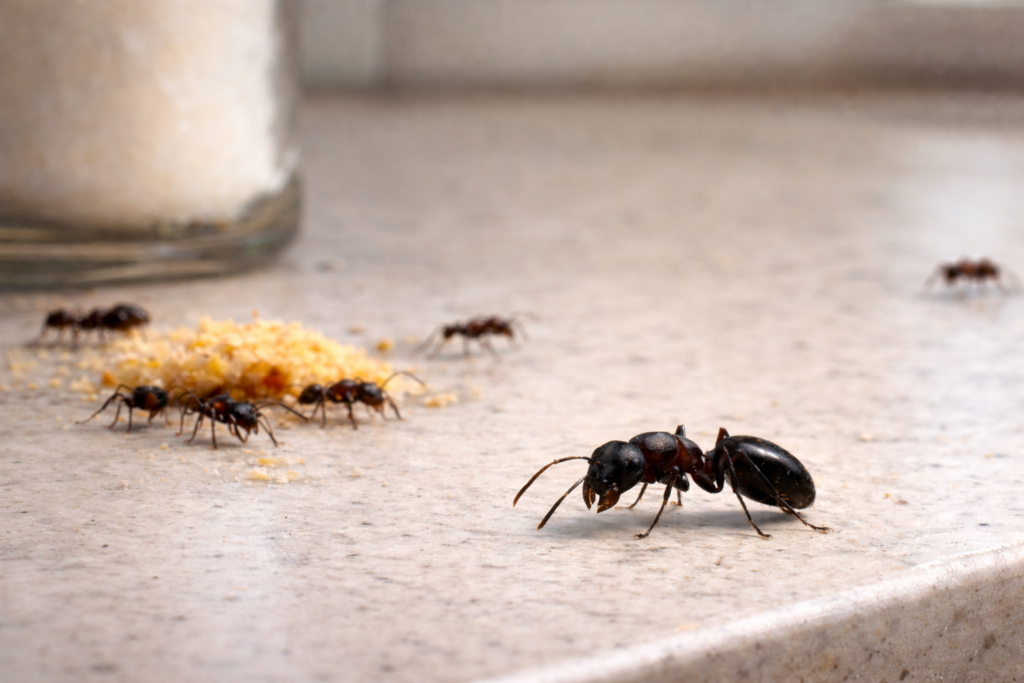
The most common kitchen invader in Missouri. Small (1/16 to 1/8 inch), dark brown to black, and they emit a distinct rotten-coconut smell when crushed. They nest in walls, under floors, and in the soil near foundations. They’re after sweets and moisture.
Pavement Ants
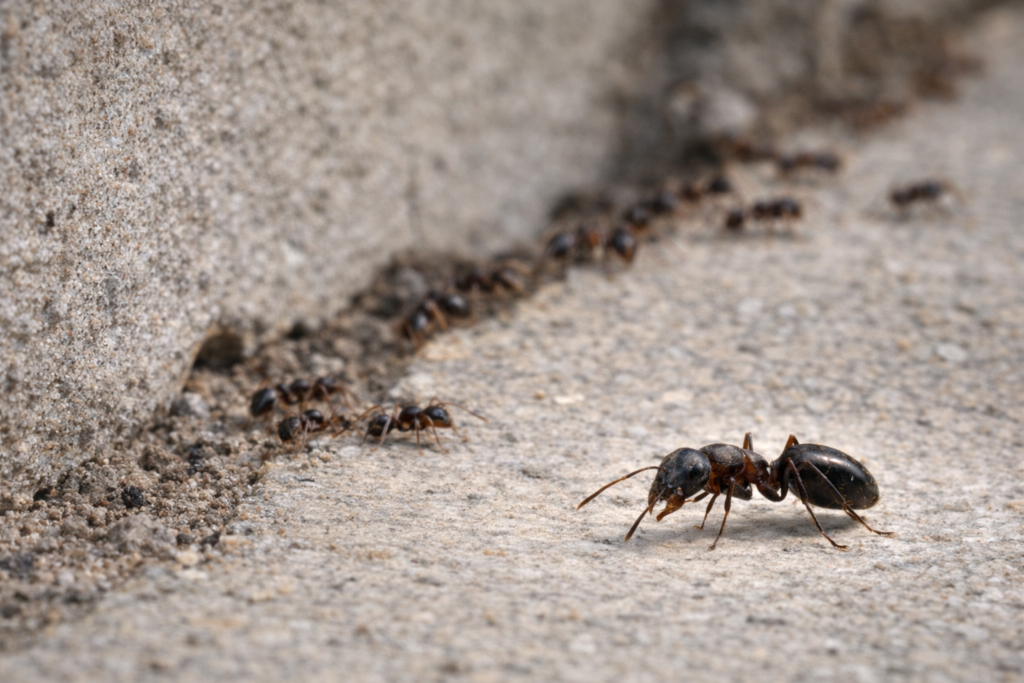
Small, brown ants that nest in cracks in driveways, sidewalks, and along foundations. You’ll see small mounds of fine dirt pushed up through cracks. They forage indoors for greasy and sweet foods and are especially common in basements and ground-level rooms.
Carpenter Ants
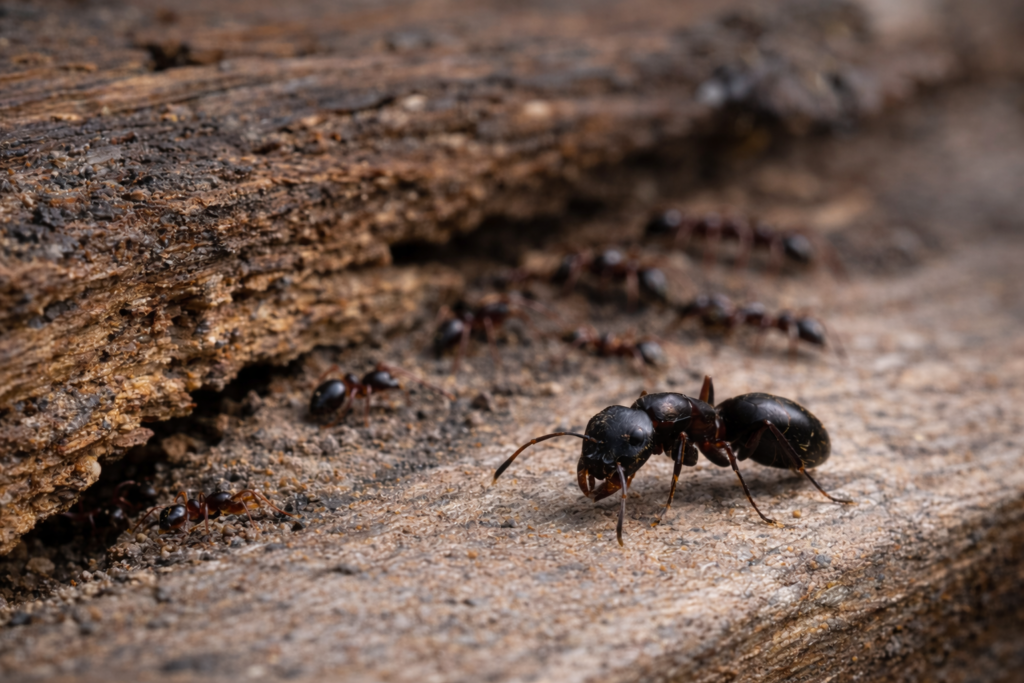
This is the one to worry about. Carpenter ants are large (1/4 to 1/2 inch), typically black, and they tunnel through moist or damaged wood to build their nests. Unlike termites, they don’t eat wood — they excavate it. But the structural damage they cause is real.2
Warning signs of carpenter ants:
‣ Frass: Smooth, sawdust-like shavings piling up near baseboards or windowsills
‣ Faint rustling sounds inside walls, especially at night
‣ Large black ants seen near moisture sources — sinks, bathtubs, leaky windows
‣ Winged ants emerging indoors means a mature colony is in the structure
Why DIY Ant Treatments Don’t Work
We hear this every week: “I’ve been spraying, but they keep coming back.” Here’s why:
👉 Killing Scouts Doesn’t Kill the Colony
The ants on your counter are a tiny fraction of the colony. The nest which can contain thousands to hundreds of thousands of workers is somewhere else entirely: in the walls, under the foundation, or in the yard. Killing the scouts just prompts the colony to send more.
👉 Spray Repellents Scatter the Problem
Most store-bought ant sprays are repellents. They create a chemical barrier that ants avoid which sounds good, but actually causes the colony to split and establish new trails in different areas of your home. One ant problem becomes three.
👉 Home Remedies Disrupt Trails Temporarily
Vinegar, cinnamon and peppermint oil they may disrupt the pheromone trail for a few hours. But the colony is still there, and it will find a new route. These are temporary disruptions, not solutions.
How Professional Ant Treatment Works
Professional treatment targets the colony, not just the ants you see. Here’s how:
✅ Spray Repellents Scatter the Problem
We identify the species (this determines the treatment approach), locate entry points, and trace trails back toward the nest. Different ant species require different strategies.
✅ Baiting
Commercial-grade gel and granular baits are placed along foraging trails and near entry points. Scout ants carry the bait back to the colony, where it spreads through the population and reaches the queen. This is how you eliminate the source.
✅ Exterior Treatment
Targeted treatment along the foundation, siding channels, and entry points creates a barrier that stops new invasions. We also treat areas where nests commonly occur — mulch beds, landscape timbers, and cracks in driveways.
✅ Follow-Up
Most ant treatments show significant results within 1–2 weeks. Follow-up visits ensure the colony is eliminated and not just temporarily disrupted.

Our technicians are trained to identify ant species on sight and target treatment to the colony, not just the ants you see.
Prevention: How to Keep Ants Out
Once the immediate problem is treated, these habits keep ants from coming back:
In the Kitchen
1. Wipe counters every night — even small crumbs attract scouts
2. Store food in sealed containers — especially sugar, honey, cereal, and pet food
3. Fix dripping faucets — ants need water as much as food
4. Clean behind the stove and fridge — crumbs and grease accumulate in these hidden areas
5. Take trash out daily and use a can with a tight-fitting lid
Around the House
1. Seal cracks and gaps where pipes enter walls, around windows, and along the foundation
2. Pull mulch back at least 12 inches from the foundation
3. Trim vegetation that touches the house — branches and shrubs are ant highways
4. Fix moisture issues — leaky faucets, poor drainage, condensation
5. Store firewood away from the home and elevated off the ground
Reference:
- Truman’s Scientific Guide to Pest Management Operations — Ant biology, foraging behavior, and colony structure.
- University of Missouri Extension — Carpenter Ant Identification and Management. extension.missouri.edu.
- U.S. Environmental Protection Agency (EPA) — Integrated Pest Management for Ants. epa.gov/safepestcontrol.
Stop the Ant Invasion — Call Today
Roberts Pest Control eliminates ant colonies at their source with professional baiting systems that work. Serving St. Louis, Jefferson, St. Francois, and St. Charles Counties with same-week appointments.
314-967-BUGS (2847)
or Email us at [email protected]
Frequently Asked Questions
Why do I keep seeing ants even after I spray?
Store-bought sprays kill the ants you see but don’t reach the colony. The queen continues producing workers, and the colony simply reroutes around the treated area. Professional baiting targets the colony itself, which is the only way to stop them permanently.
Are carpenter ants as bad as termites?
Carpenter ants cause real structural damage by excavating wood for nesting. While they typically cause less damage than termites (since they don’t eat the wood), an untreated carpenter ant colony can compromise framing, especially in moisture-damaged areas. They should be treated promptly.
How fast can an ant problem get out of control?
Very fast. A colony that’s just sending scouts in March can have full foraging trails throughout your kitchen by April. Ant colonies can contain thousands to hundreds of thousands of workers, and queens can live for years. The earlier you treat, the easier and cheaper it is.
Is ant treatment safe for my pets?
Yes. We use EPA-registered products applied in targeted areas — cracks, crevices, and bait stations — not broadcast across surfaces your pets contact. We’ll let you know if any temporary precautions are needed for your specific situation.