


Termite Treatment & Prevention
Termites in St. Louis
Subterranean termites cause billions of dollars in US damage annually. Learn the warning signs.
Inside a Subterranean Termite Colony
St. Louis’ termite is the Eastern subterranean termite — it lives in the soil, needs constant moisture, and eats cellulose (wood, paper, cardboard). Two signs give it away: swarmers in spring (dark, with four equal-length wings — tell them from winged ants by the thick waist and straight antennae) and pencil-width mud tubes running up foundations, which keep the colony moist and hidden. A colony works in castes:
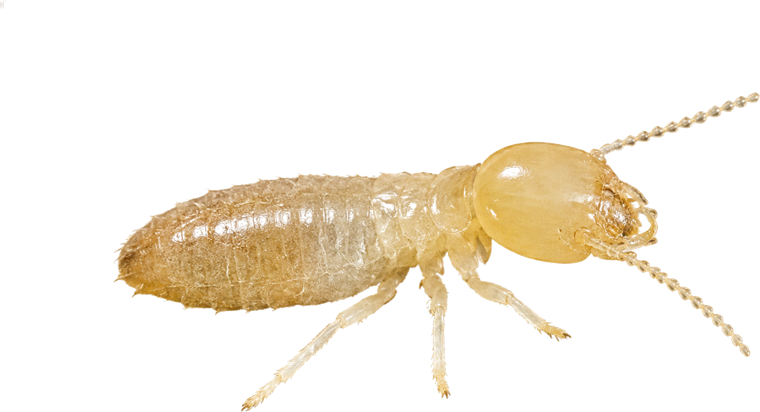
Worker
Reticulitermes spp.
Identify: The most numerous caste: pale, creamy-white, soft-bodied, wingless and blind.
Life cycle: Workers (and nymphs) do all the labor — feeding the queen, soldiers and young, grooming, and building tunnels.
Habits & risk: This is the caste that actually eats the wood, so workers cause the structural damage. They forage between soil and wood around the clock — termites don’t rest.
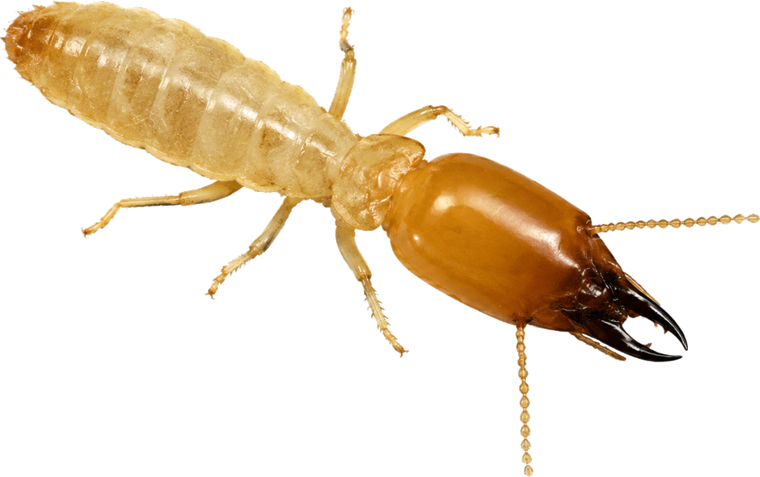
Soldier
Reticulitermes spp.
Identify: Pale body with a hardened, enlarged head and a pair of oversized mandibles (jaws).
Life cycle: One job: defense, mainly against invading ants. When the nest is breached, soldiers line up facing outward as a living blockade.
Habits & risk: Soldiers can’t feed themselves — they depend entirely on the workers. Their share of the colony is small, so seeing them means the colony is well established.
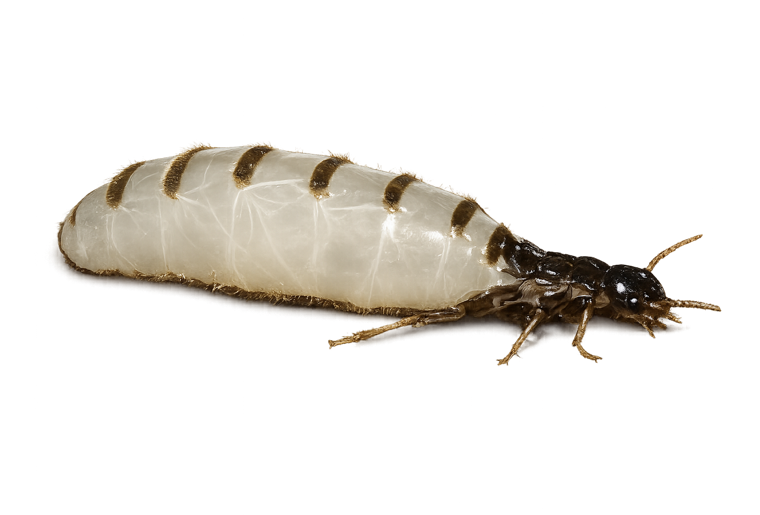
Queen & Reproductives
Reticulitermes spp.
Identify: The egg-layers. After a swarm, a queen and king shed their wings, pair off, and start a new colony from a small soil cell.
Life cycle: In a mature colony, extra (supplementary) reproductives lay most of the eggs — they can replace a lost queen or bud off to start a new colony underground.
Habits & risk: A single colony can exceed a million members, all fed by the workers — which is why an untreated infestation keeps growing and feeding continuously.
Identification and biology per Truman’s Scientific Guide to Pest Management Operations, Ch. 8. Colony elimination with the Sentricon® System.
Need Professional Treatment?
Visit our full service page for detailed treatment information, pricing, and prevention tips.
Get Help with Termites
Free Quotes. Locally owned, licensed & insured.