

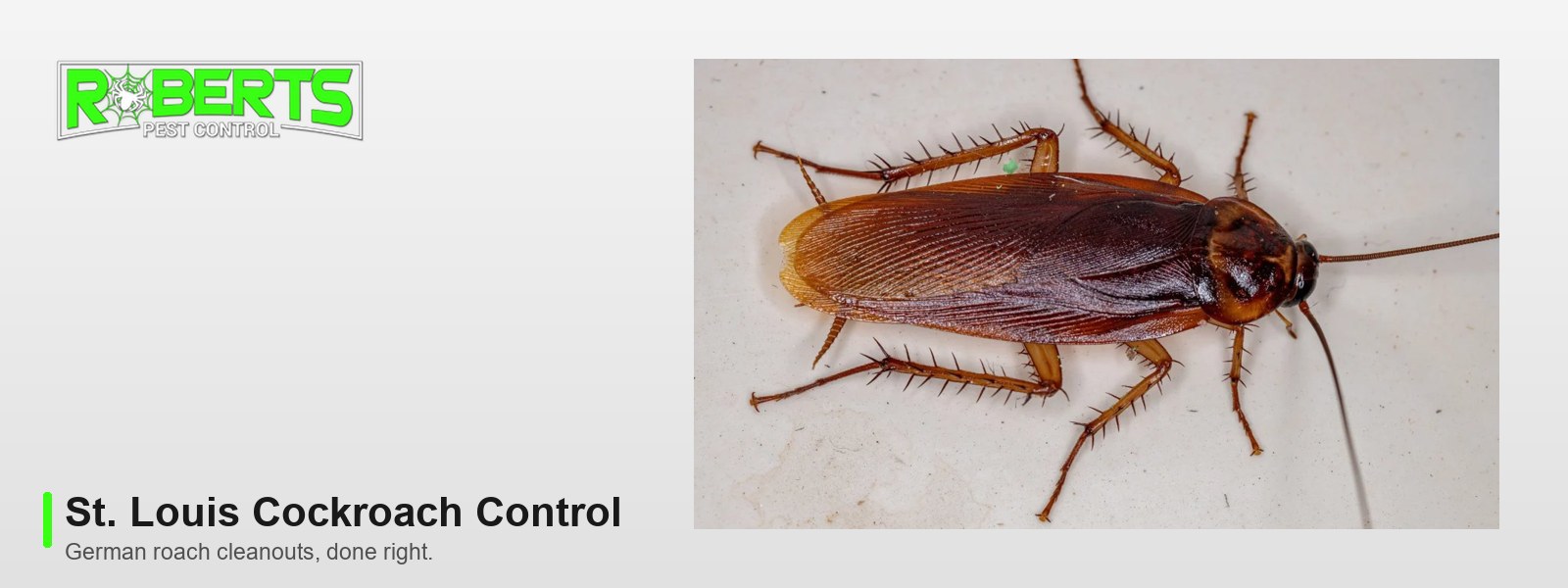

Cockroach Control & German Roach Cleanout
Cockroaches in St. Louis
German cockroaches are the #1 indoor pest. A single pair can produce thousands of offspring in a year.
Common Cockroaches in the St. Louis Area
Three species cause nearly all local infestations. Here’s how to tell them apart — and why each one matters.
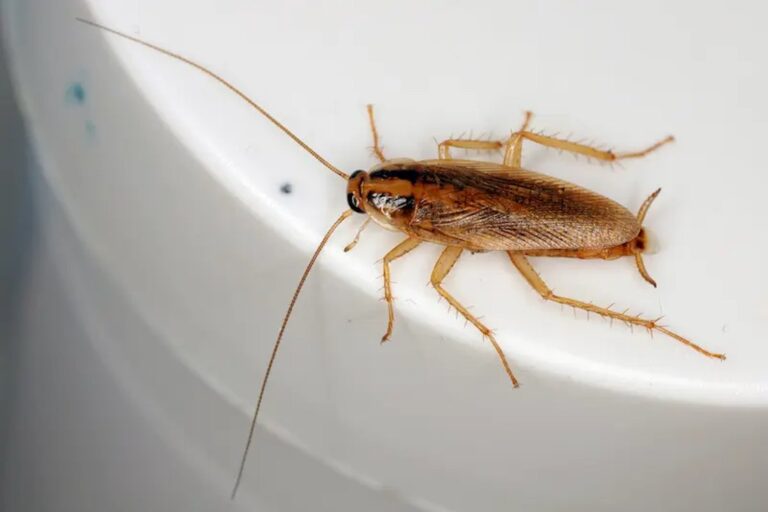
German Cockroach
Blattella germanica
Identify: Small — ½ to ⅝ in., pale to medium brown, with two dark stripes running down the pronotum behind the head. Has wings but never flies.
Life cycle: Females carry the egg capsule until about a day before it hatches; each capsule holds 30–48 eggs, and a female produces 4–8 in her lifetime. Egg to adult in as little as ~40 days when warm — which is how infestations explode.
Habits & risk: Hides close to warmth, food and moisture — kitchens and bathrooms. Hitchhikes indoors in cartons, bags and deliveries. Droppings and cast skins are potent asthma and allergy triggers.
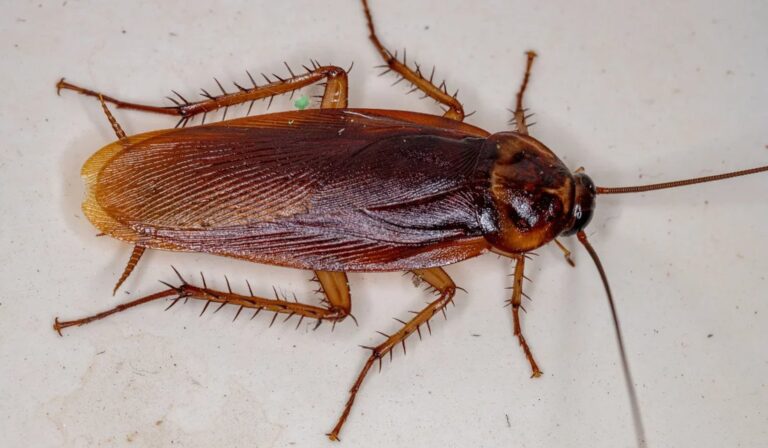
American Cockroach
Periplaneta americana
Identify: The largest common roach — 1½ in. or more, reddish-brown with a pale yellow border around the pronotum. Also called the “water bug” or “palmetto bug.”
Life cycle: The female drops a dark brown egg capsule of 14–16 eggs about once a week — up to 15–90 over her life. Adults can live 15+ months.
Habits & risk: Favors warm, damp, dark places — basements, crawlspaces, floor drains, sewers and steam tunnels. Feeds on decaying matter and tracks bacteria onto surfaces.
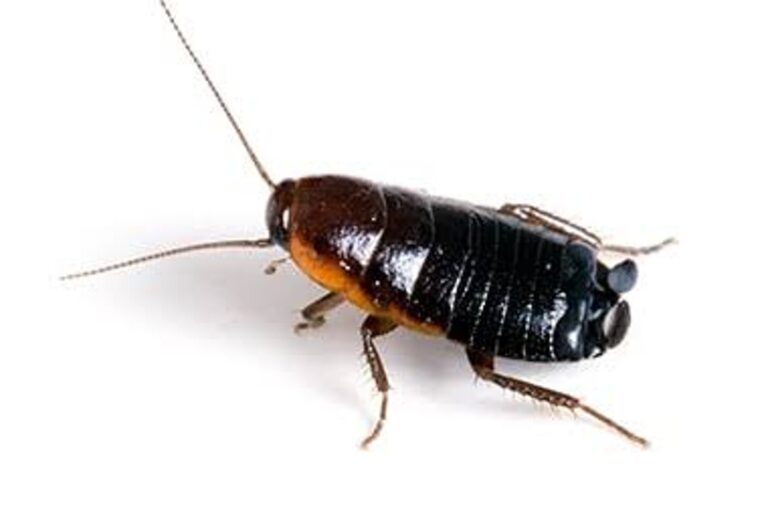
Oriental Cockroach
Blatta orientalis
Identify: About 1 to 1¼ in., very dark brown to nearly black with a greasy sheen. Neither sex can fly.
Life cycle: The female carries the capsule about 30 hours, then drops it; roughly 8 capsules of 16 eggs each. Populations follow a season, peaking in late spring and early summer.
Habits & risk: The dampest, coolest “water bug” — drains, basements, crawlspaces, mulch and retaining walls. Sluggish, avoids light, and moves indoors during drought or cold.
Identification and biology per Truman’s Scientific Guide to Pest Management Operations.
Need Professional Treatment?
Visit our full service page for detailed treatment information, pricing, and prevention tips.
Get Help with Cockroaches
Free Quotes. Locally owned, licensed & insured.