


Tick Control & Prevention
Ticks in St. Louis
Missouri is home to several medically significant tick species.
Ticks of the St. Louis Area
Ticks aren’t insects — they’re arachnids, closer cousins to mites and spiders. Each hatches as a tiny six-legged “seed tick,” then needs a blood meal to molt into an eight-legged nymph and again into an adult. They can’t jump or fly; instead they “quest” — climbing to the tips of grass and low brush, usually only ankle-to-knee height, and grabbing on as a warm body brushes past. They can survive months between meals, and any tick should be treated as a possible disease carrier. In a yard they concentrate right where the lawn meets the trees, brush and tall grass — which is exactly the harborage zone we target, along with keeping grass short and clearing leaf litter. (Pets need their own vet-provided tick protection, too.)
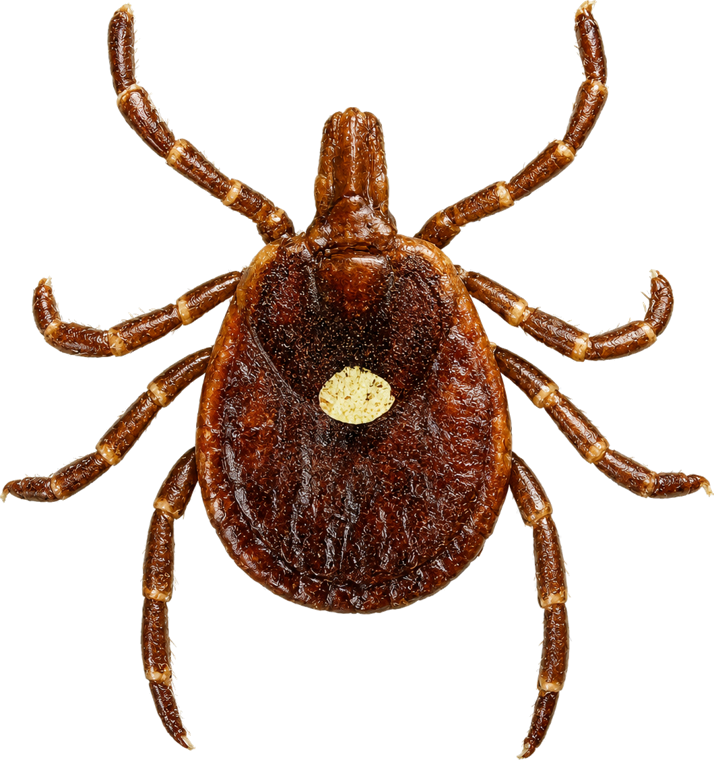
Lone Star Tick
Amblyomma americanum
Identify: Reddish-brown and rounded; the adult female carries a single cream-white dot in the center of her back — the “lone star” that names her.
Habitat & behavior: The aggressive human-biter of Missouri woods, trails and yard edges — all three stages will bite people, and it’s the tick you’re most likely to pull off in this area.
Why it matters: A vector of ehrlichiosis, and increasingly linked to the alpha-gal red-meat allergy. (This species isn’t detailed in our reference text; these facts are from current tick references.)
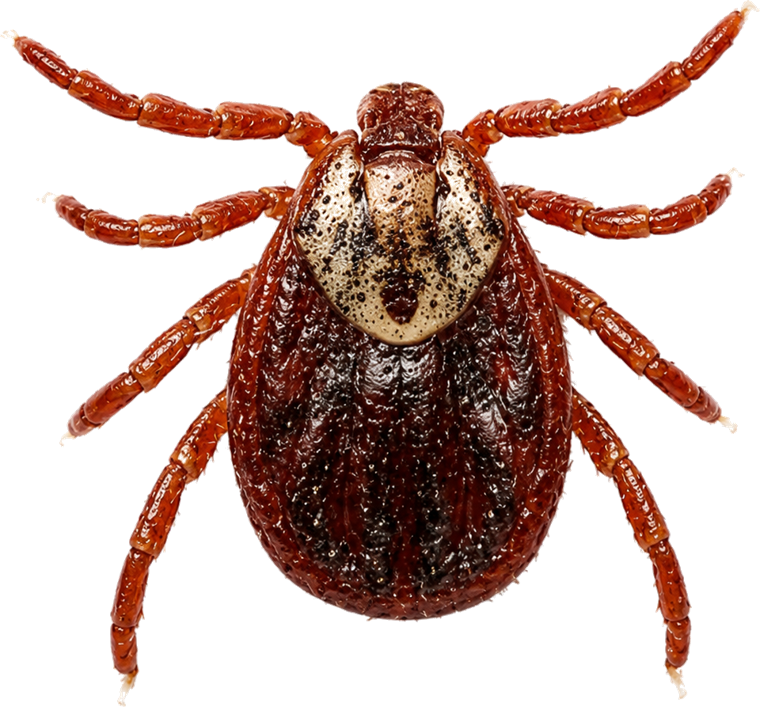
American Dog Tick
Dermacentor variabilis
Identify: Brown, mottled with silvery-white markings; swells to slate-gray when engorged. Noticeably larger than a deer tick.
Habitat & behavior: Adults prefer dogs but bite many large animals; the young stages feed on small rodents. The most common Dermacentor across the eastern and central U.S.
Why it matters: The main carrier of Rocky Mountain spotted fever, and one of the ticks that can cause tick paralysis.
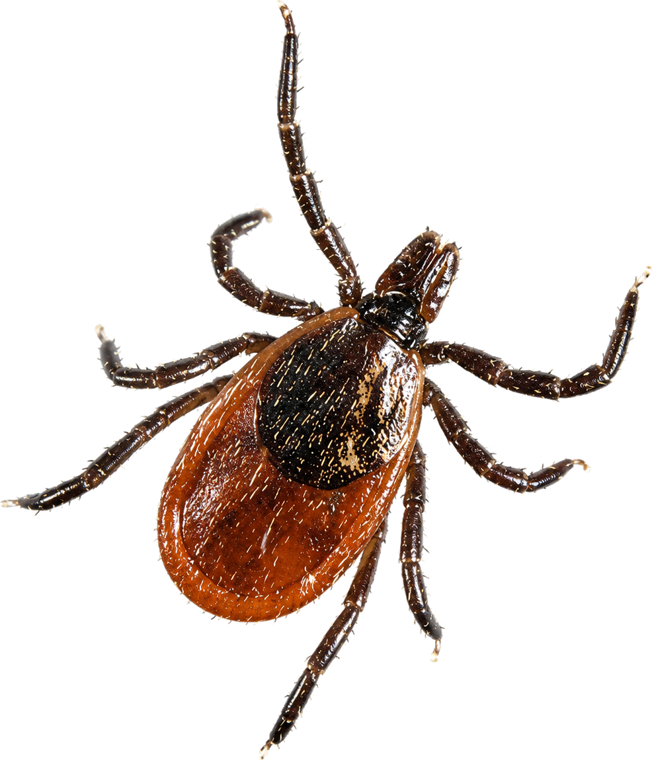
Blacklegged / Deer Tick
Ixodes scapularis
Identify: Small and dark-legged — much tinier than the dog tick, so it’s easy to miss until it’s attached.
Habitat & behavior: Feeds on white-tailed deer and mice, and is densest right along the wooded edge of a yard. The nymph is the stage most likely to bite people.
Why it matters: The principal carrier of Lyme disease. Because the biting nymph is the size of a poppy seed, prompt tick checks after time outdoors matter.
Tick biology and yard-control principles per Truman’s Scientific Guide to Pest Management Operations, Ch. 12. Lone star tick specifics are from current tick references, as that species is not detailed in this edition.
Need Professional Treatment?
Visit our full service page for detailed treatment information, pricing, and prevention tips.
Get Help with Ticks
Free Quotes. Locally owned, licensed & insured.