


General Pest Control & Residential Pest Protection
General Pest Control & Residential Pest Protection
Our Residential Ongoing Service (ROS) keeps your home protected year-round with bi-monthly treatments that rotate chemistries — so pests never build resistance. One program covers ants, spiders, roaches, wasps, and more.
Licensed & Insured
Prompt Scheduling
We Stand Behind Our Work
Free Quotes

What’s Included in Our Residential Ongoing Service
Our ROS program is designed to keep your home pest-free year-round — not just treat problems after they start. Here’s what makes it work.

Bi-Monthly Service
Scheduled treatments every other month. We treat your home’s exterior perimeter, entry points, eaves, and interior as needed. Consistent protection, no gaps.

Chemistry Rotation
We rotate between different product families each visit so pests never develop resistance. This is what separates professional pest control from one-and-done sprays.
Interior & Exterior
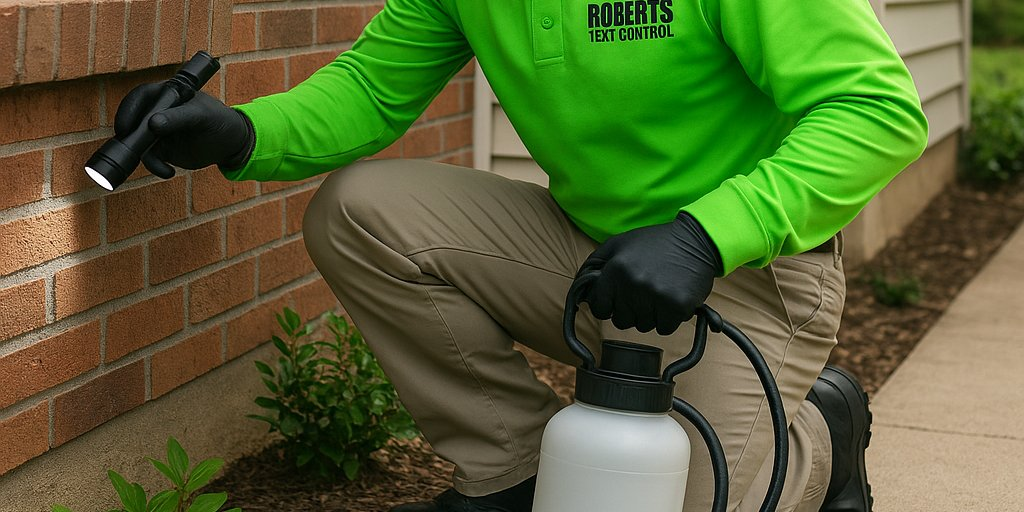
Full perimeter barrier treatment plus targeted interior applications in kitchens, bathrooms, basements, and any active areas.

Callback Guarantee
Pests come back between visits? So do we — at no additional charge. Licensed & insured.
Pests Covered by Our ROS Program
One program, one price — all of the most common household pests in the St. Louis area are included in your bi-monthly service.
Carpenter ants, odorous house ants, pavement ants — every ant species common to Missouri is covered under your ROS program.
General spider control including brown recluse management with targeted interior treatments in harborage areas, closets, and storage spaces.
German roaches, American roaches, oriental roaches — interior and exterior treatments to eliminate existing populations and prevent reinfestation.
Paper wasps, mud daubers, and other stinging insects. Nest removal and perimeter treatments to keep them from building near your home.
Moisture-loving pests that invade bathrooms, basements, and laundry rooms. Our treatments target the areas where they thrive.
These pests follow moisture and other insects indoors. Perimeter barriers and interior treatments reduce both them and their food sources.
Why Bi-Monthly?
One-time treatments wear off. Pests are persistent — they breed, they adapt, they find new entry points. Our bi-monthly rotation program provides continuous, overlapping protection that never gives pests a window to reestablish. It’s the difference between fighting fires and preventing them.
How Our ROS Program Works — 4 Steps
From initial inspection to year-round protection, here’s exactly what to expect.
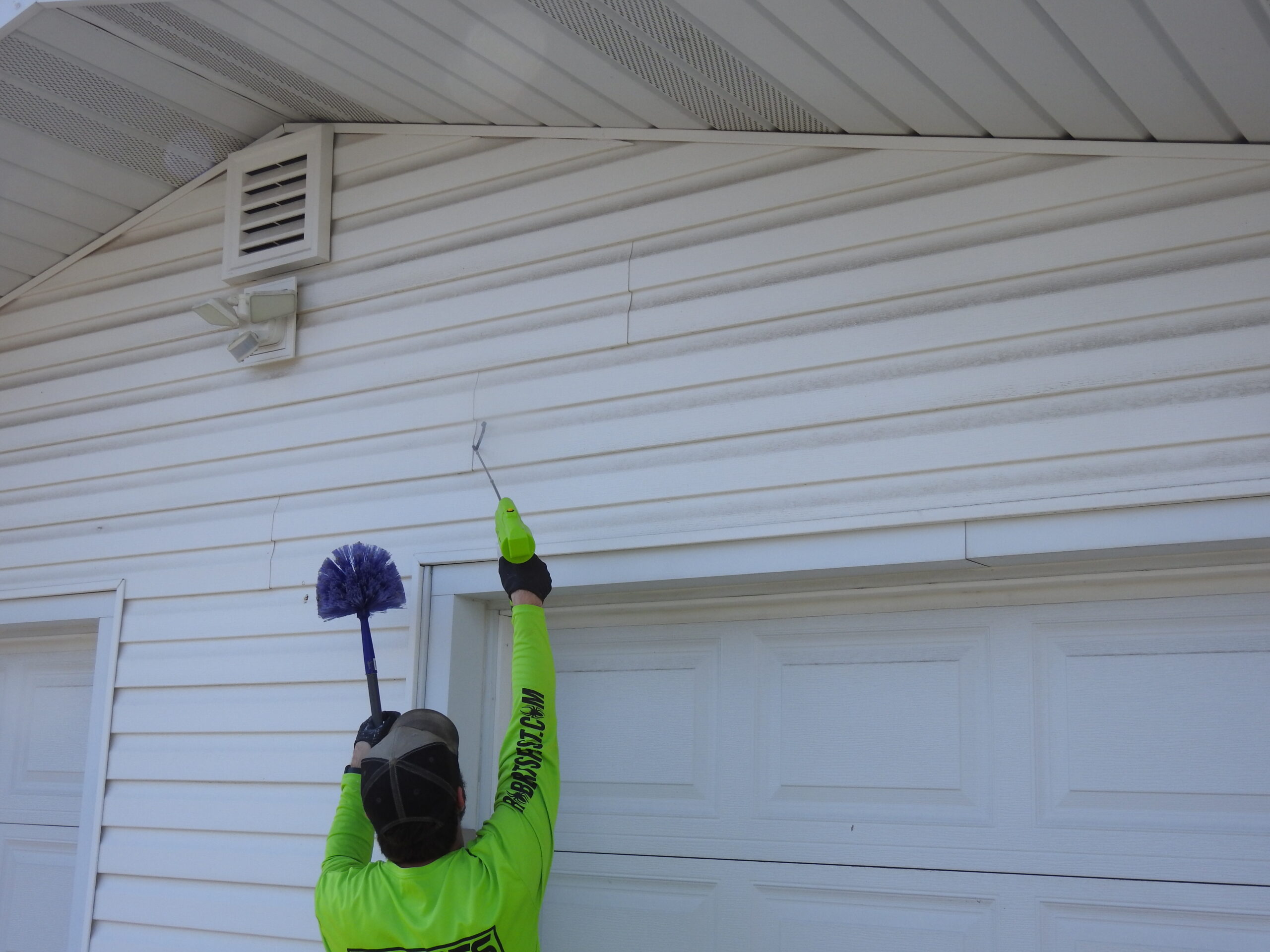
- Initial Service — Inside & Out — We start every new customer with a thorough initial service. Your technician inspects the interior and exterior of your home, identifying entry points, harborage areas, and conditions that attract pests. Inside, we treat all crack and crevice areas along baseboards and other key zones. Outside, we apply a full perimeter barrier treatment. We dust siding channels where pests hide and run a webster around the exterior to knock down cobwebs and egg sacs. The treatment is tailored to whatever pest pressure you’re dealing with and whatever’s most active that season.
- Bi-Monthly Return Visits — Every other month, your technician returns for a scheduled service. We refresh the exterior perimeter barrier, treat interior areas as needed, clear new cobwebs, re-dust siding channels, and adjust our approach based on seasonal pest activity. We rotate chemistries each visit so pests never build resistance to what we’re using.
- Seasonal Targeting — Missouri pest pressure changes with the seasons — ants and spiders in spring, mosquitoes and wasps in summer, rodents and overwintering pests in fall. Your bi-monthly service adapts to target whatever’s most active, so you’re always protected against the current threat, not last month’s.
- Callback Guarantee — See pests between visits? Call us and we come back at no additional charge. That’s not a marketing line — it’s how we operate. Your home is supposed to be pest-free, and if it’s not, we fix it.
Homeowner Tips — Reduce Pest Activity
Wipe down counters, sweep floors, and clean up spills immediately. Food residue is the number one attractant for ants and roaches.
Store pantry items in airtight containers. Open bags and boxes are an invitation for pests to move in.
Repair leaky faucets, running toilets, and poor drainage. Moisture attracts roaches, silverfish, centipedes, and earwigs.
Caulk gaps around doors, windows, pipes, and utility lines. Even small openings are highways for insects.
Keep bushes, tree branches, and mulch at least 12 inches from your foundation. Overgrown landscaping creates pest bridges into your home.
Replace cardboard boxes with sealed plastic bins. Declutter basements, attics, and garages to eliminate hiding spots.
Frequently Asked Questions
What does the Residential Ongoing Service cover?
How much does the ROS program cost?
Do I have to sign a long-term contract?
What about termites, bed bugs, or mosquitoes?
Occasional Invaders: The Pests That Wander In
These pests breed outdoors and only wander inside — so the fix isn’t endless indoor spraying, it’s exclusion (door sweeps, caulking, screened vents), drying out damp areas, and a treated exterior perimeter that stops them before they cross the threshold.
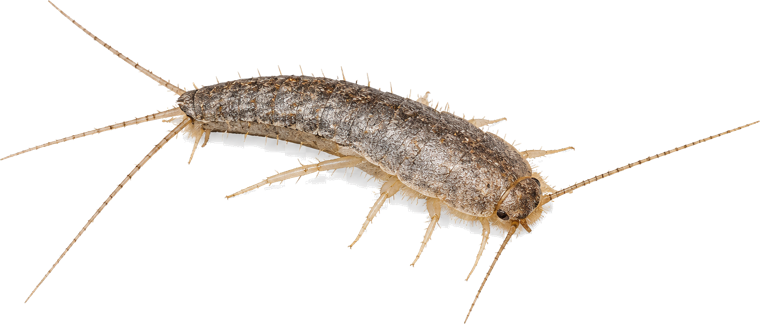
Silverfish
Lepisma saccharina
Identify: Silver and slick, shaped like a carrot — broad at the head, tapering to three tail bristles at the rear. About ½ in., wingless; young look like tiny adults.
Life cycle: Gradual metamorphosis; likes warmth around 75°F and humidity. Fast night runners that can go a long time without food.
Habits & risk: Feeds on starchy things — paper, book bindings, glue, flour, some fabrics — leaving etching and yellow stains. A damp-home nuisance in basements, attics and closets.
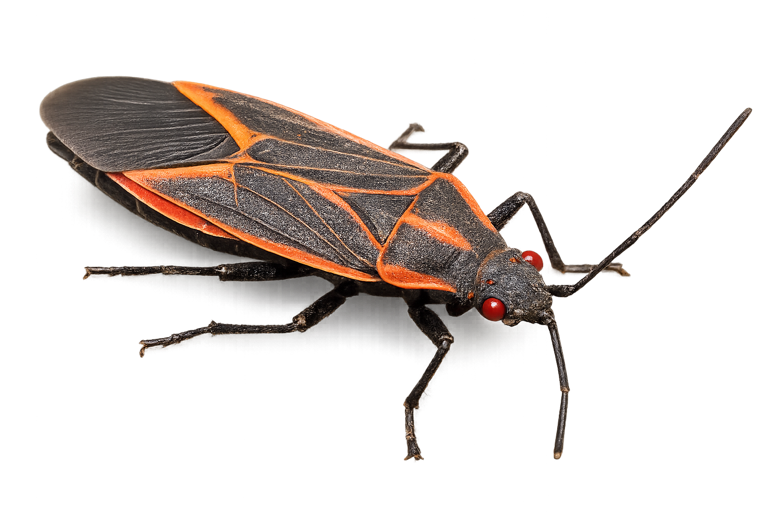
Boxelder Bug
Boisea trivittata
Identify: About ½ in., black with three narrow red-orange lines down the back; nymphs are bright red.
Life cycle: Feeds on boxelder and other maples all season, then overwinters as an adult in sheltered spots.
Habits & risk: On warm fall days it masses on sunny south- and west-facing walls, then slips into wall voids and attics for winter. Mostly a nuisance — it can stain surfaces and smells bad when crushed. Removing host boxelder trees helps.
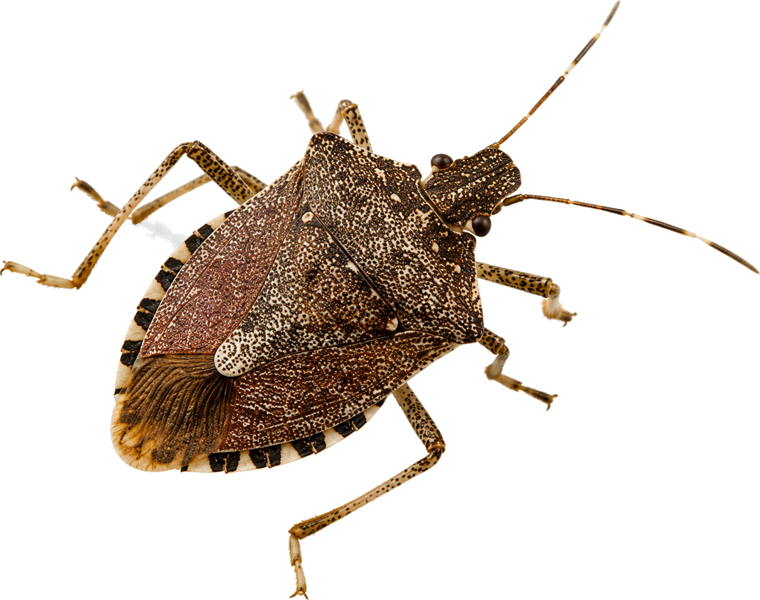
Brown Marmorated Stink Bug
Halyomorpha halys
Identify: Shield-shaped and mottled brown, about ½ in., with faint white bands on the antennae.
Life cycle: A newer invader that overwinters as an adult; it slips indoors in fall and re-emerges on warm days.
Habits & risk: Clusters in wall voids and attics to overwinter and gives off a strong odor when disturbed or crushed. Like the boxelder bug, it’s best stopped with exclusion and an exterior perimeter treatment before it gets in.
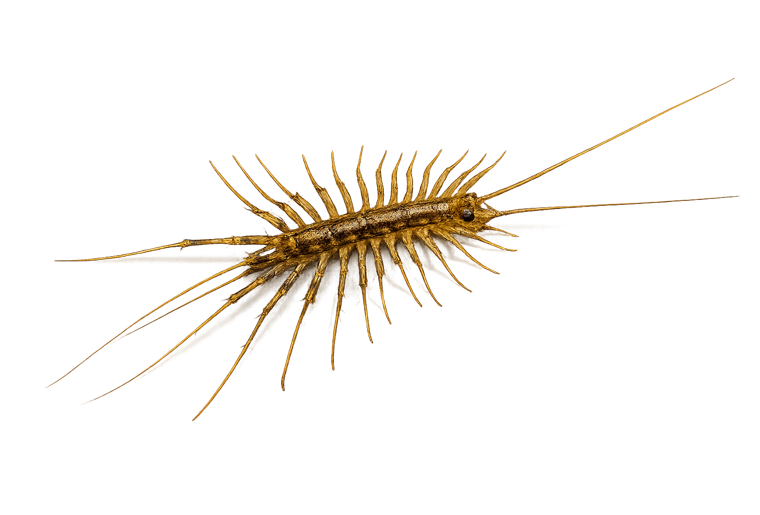
House Centipede
Scutigera coleoptrata
Identify: A ~1–1½ in. body that looks far bigger thanks to 15 pairs of long, banded legs; grey-yellow with three dark stripes.
Life cycle: Unusually, it can live its whole life indoors in damp, undisturbed spots — cellars, bathrooms, crawlspaces.
Habits & risk: Essentially harmless — a beneficial predator of other insects and spiders. Startling more than dangerous; lots of them usually means dampness and other prey insects to fix.
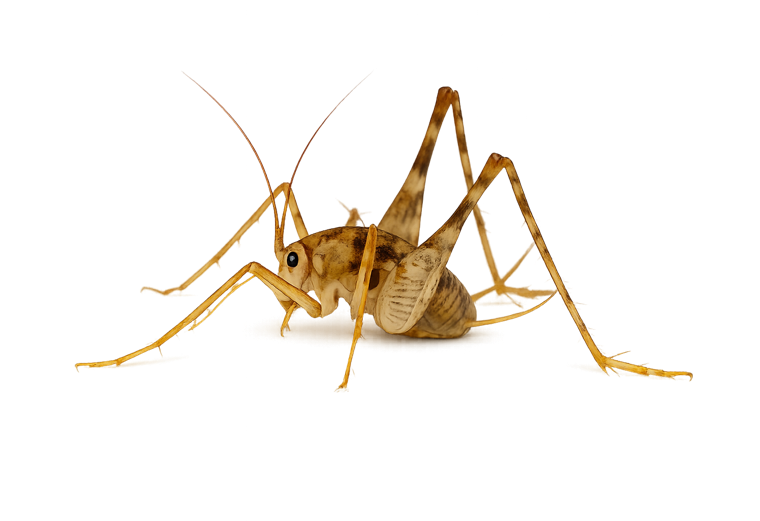
Camel Cricket
Ceuthophilus spp.
Identify: Humpbacked, wingless and tan, with very long legs; it jumps when disturbed (people call it a “cave” or “spider” cricket).
Life cycle: Gradual metamorphosis; nocturnal and omnivorous. Unlike house crickets, it is not drawn to light.
Habits & risk: Lives in damp, dark basements and crawlspaces — especially those with a dirt floor. In numbers it can chew paper and fabrics. Control is drying the space out and sealing entry points.
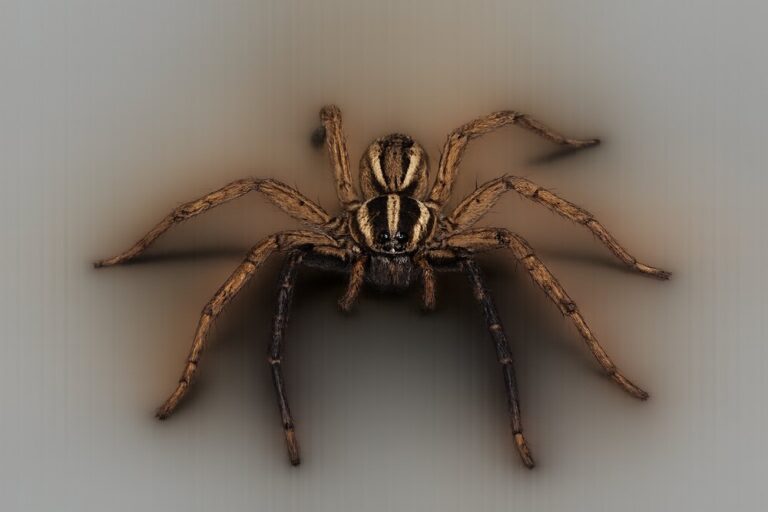
Wolf Spider
Family Lycosidae
Identify: A large, hairy, brown-and-gray ground spider — up to about 1–1½ in. across including the legs — that runs fast and does not build a web. Its eyes reflect light in a flashlight beam at night.
Life cycle: A hunting spider that chases prey down on the ground instead of trapping it. The female carries her round egg sac attached to her spinnerets, then carries the newly hatched spiderlings on her back.
Habits & risk: Wanders indoors in fall looking for warmth, usually staying low — doorways, garages, basements. Startling to see but essentially harmless; a bite is no worse than a bee sting. Lots of them usually means there are other insects around for them to hunt.
Identification and biology per Truman’s Scientific Guide to Pest Management Operations, Ch. 15 (the brown marmorated stink bug, a newer arrival, is added from current pest references).
Start Year-Round Protection Today
Free estimates. Same-day service available. No long-term contracts. Licensed & insured.