


Restaurant & Food Service Pest Control
Restaurant & Food Service Pest Control
One failed health inspection can shut your doors. Roberts Pest Control keeps St. Louis restaurants inspection-ready with targeted IPM programs built for commercial kitchens.
Licensed & Insured
Inspection Documentation
IPM Programs
Emergency Service
Targeted Pest Control for Food Service Environments
Restaurants face unique pest pressures that residential treatments cannot address. Grease, moisture, constant deliveries, and 24-hour warmth create conditions that attract and sustain infestations fast.
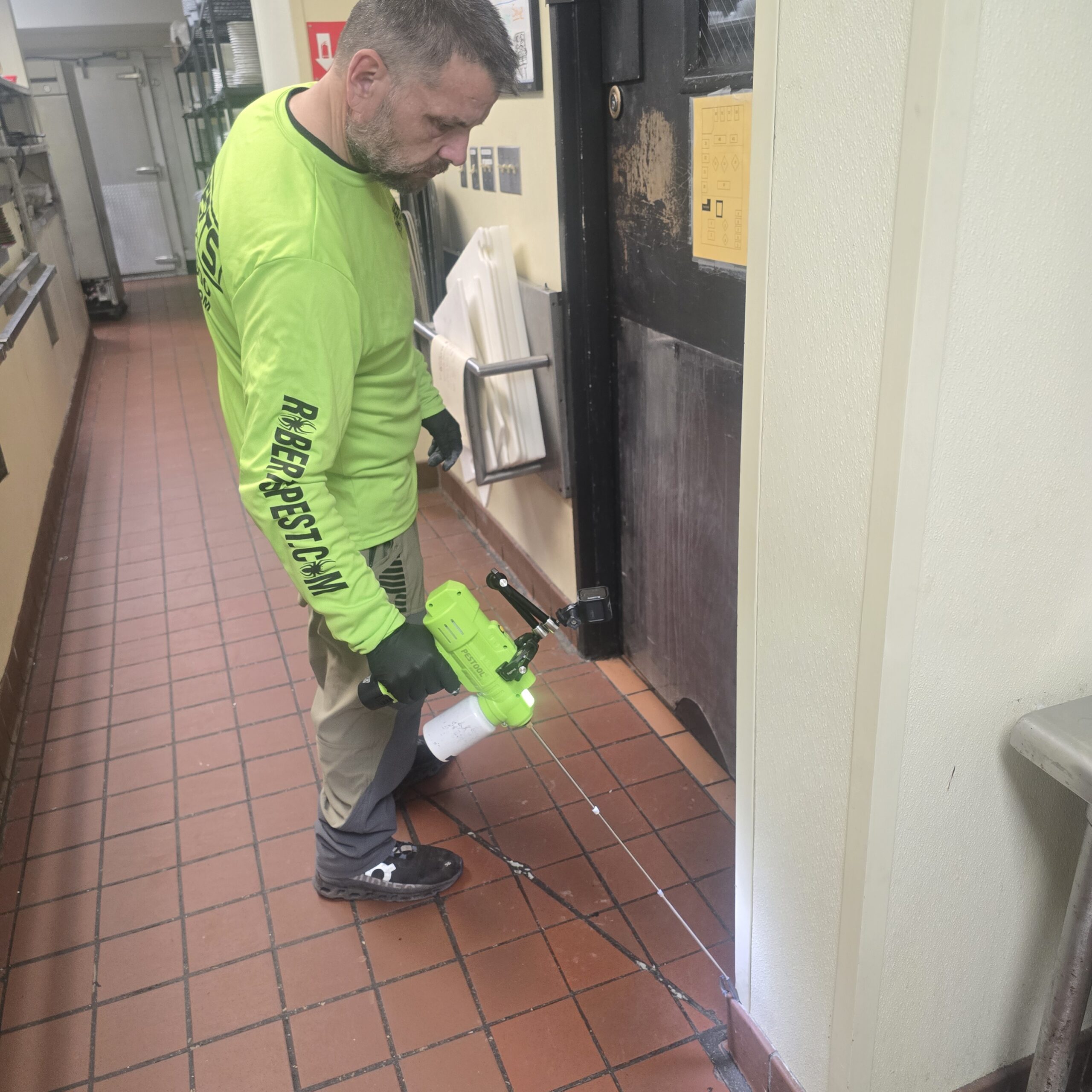
German Cockroach Control
German roaches are the number one pest in commercial kitchens. They breed rapidly in warm, moist areas near equipment, drains, and food prep surfaces. Our targeted gel bait and dust applications eliminate colonies at the source without disrupting your service.

Drain Fly & Small Fly Management
Drain flies, fruit flies, and phorid flies breed in the organic buildup inside floor drains, grease traps, and beverage dispensers. We identify breeding sources, treat active sites, and recommend sanitation fixes to prevent recurrence.
Rodent Prevention & Exclusion
Mice and rats follow food smells through gaps around utility lines, loading docks, and dumpster areas. We install tamper-resistant bait stations, seal entry points, and monitor activity with detailed reporting for your health inspector.
Stored Product Pest Control
Indian meal moths, saw-toothed grain beetles, and other pantry pests arrive in deliveries and infest dry storage. We inspect incoming goods areas, treat active infestations, and implement monitoring to catch problems before they spread.
Every Zone in Your Restaurant Is a Target
Pests exploit every corner of a food service operation. We build treatment plans around the specific vulnerabilities of your facility.
Warm equipment, food residue, and moisture create ideal conditions for German cockroaches and small flies. We treat behind equipment, inside wall voids, and under counters without contaminating food contact surfaces.
Organic buildup in floor drains is the primary breeding site for drain flies and phorid flies. We identify every active drain and treat with biological drain treatments that break down the biofilm where larvae develop.
Dumpster enclosures and delivery docks are entry points for rodents, cockroaches, and flies. We treat perimeters, install exterior bait stations, and recommend operational changes to reduce attraction.
Stored product pests arrive in deliveries. Rodents target dry goods. Even walk-in coolers are not immune to German roaches seeking the warmth of compressor motors. We monitor and treat every storage area.
Fruit flies near bar drains and beverage stations. Rodent droppings in booth bases. Ants trailing along baseboards. Front-of-house pest sightings cost you customers and reviews.
Drain flies in restroom floor drains. Cockroaches in break room lockers. These areas are often overlooked but are flagged by health inspectors every time.
Health Department Compliance — We Keep You Inspection-Ready
A pest sighting during a health inspection can result in point deductions, mandatory follow-ups, or temporary closure. Roberts Pest Control provides the documentation and ongoing service that keeps your record clean.
What we provide for every account:
- Detailed service reports after every visit
- Bait station maps and monitoring logs
- Pest activity trend reports
- Corrective action recommendations
- Inspector-ready documentation binder
- 24/7 emergency callback service
- IPM program meeting FDA & state standards
- SDS sheets for all products used on-site
When the inspector asks about your pest control program, you hand them the binder. No scrambling, no guessing, no violations.
Commercial Kitchen IPM — 5 Steps
Our Integrated Pest Management approach is designed specifically for food service environments where safety and compliance are non-negotiable.
- Facility Assessment — We walk every zone of your restaurant — kitchen, storage, receiving, dining, restrooms — identifying active pests, harborage areas, entry points, and sanitation gaps.
- Custom IPM Plan — Based on the assessment, we build a treatment plan tailored to your facility’s layout, menu type, operating hours, and specific pest pressures. No cookie-cutter programs.
- Targeted Treatment — Gel baits in cockroach harborage areas. Dust in wall voids and equipment cavities. Biological drain treatments. Exterior bait stations. All products are EPA-registered and approved for use in food handling environments.
- Monitoring & Documentation — We install monitoring devices in key areas, log all activity, and provide written reports after every service visit. Your documentation stays current and inspection-ready.
- Ongoing Service & Adjustments — Regular scheduled visits on a frequency that matches your risk level. We adjust the program as conditions change — new menu items, seasonal pressures, construction nearby — your plan evolves with your business.
Frequently Asked Questions
Can you treat while we’re open for business?
How often do restaurants need pest control service?
Will you provide documentation for our health inspector?
What products do you use in food preparation areas?
We already have a pest control company. Why switch to Roberts?
Flies in the Commercial Kitchen — and How We Stop Them
Filth flies (house flies) and small flies (fruit, phorid and drain flies) are the pests most likely to fail a health inspection. Each one breeds somewhere specific — and lasting control comes from finding and eliminating that breeding site, not from spraying the ones buzzing around the dish pit.
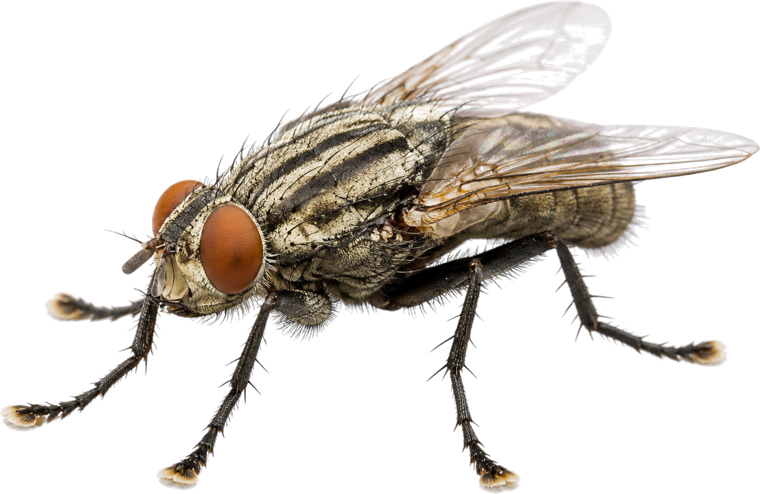
House Fly
Musca domestica
Identify: About ¼ in., dull gray with four dark stripes down the top of the thorax.
Where it breeds: Warm, moist decaying matter — garbage, dumpster residue, spilled food, soiled mop areas. Egg to adult in as little as a week in summer.
Why it matters: A filth fly linked to 100+ disease organisms; it can only drink liquids, so it regurgitates and defecates on food to feed — contaminating every surface it lands on.
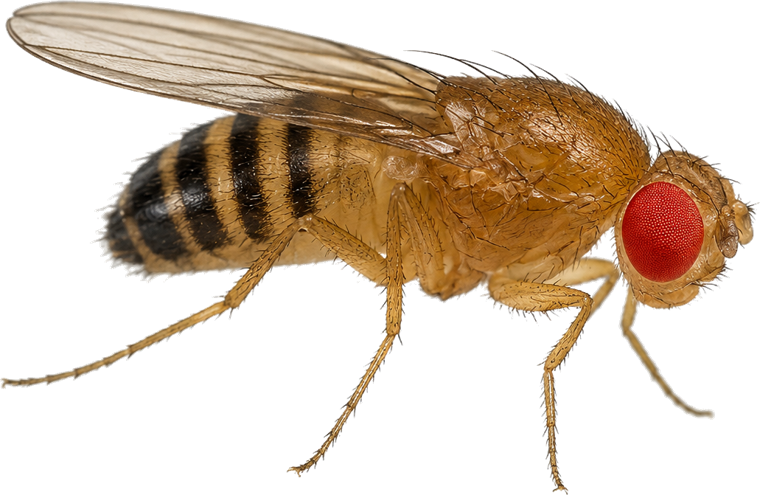
Fruit / Vinegar Fly
Drosophila melanogaster
Identify: Tiny (~⅛ in.), tan with red eyes; hovers around ripe or fermenting produce.
Where it breeds: Fermenting fruit and vegetables, dirty recycling and garbage cans, and the slime in drains, mops and rags. A female lays ~500 eggs and the cycle runs ~9–12 days.
Why it matters: Explodes in numbers fast; food processors rate it their #1 pest. A nuisance and a food contaminator that signals fermenting residue somewhere close.
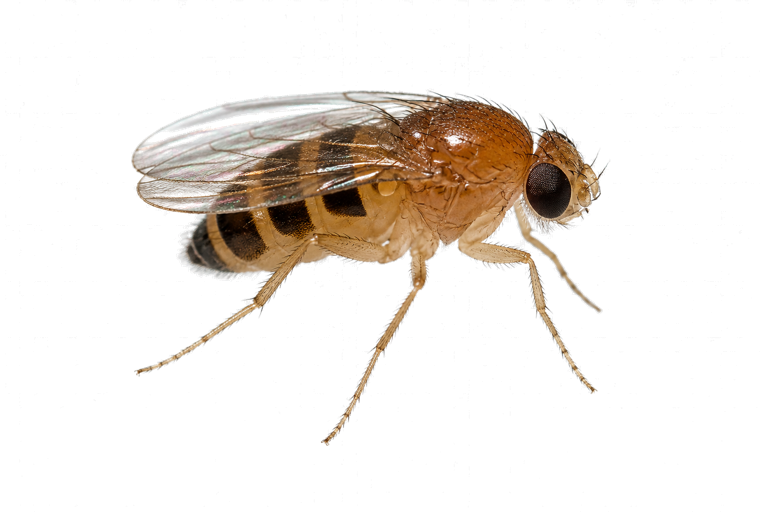
Phorid / Humpbacked Fly
Megaselia spp.
Identify: Small, fruit-fly-sized but with a distinctly humped (arched) back; runs in quick, erratic darts rather than flying.
Where it breeds: The organic film lining drain pipes, residue under and inside equipment, garbage-disposal buildup — even broken sewage pipes under a slab. Active even in winter.
Why it matters: The hardest small fly to find because the source is often hidden underground or inside plumbing. It visits filth then food, so it can carry disease organisms — a serious concern in kitchens and healthcare.
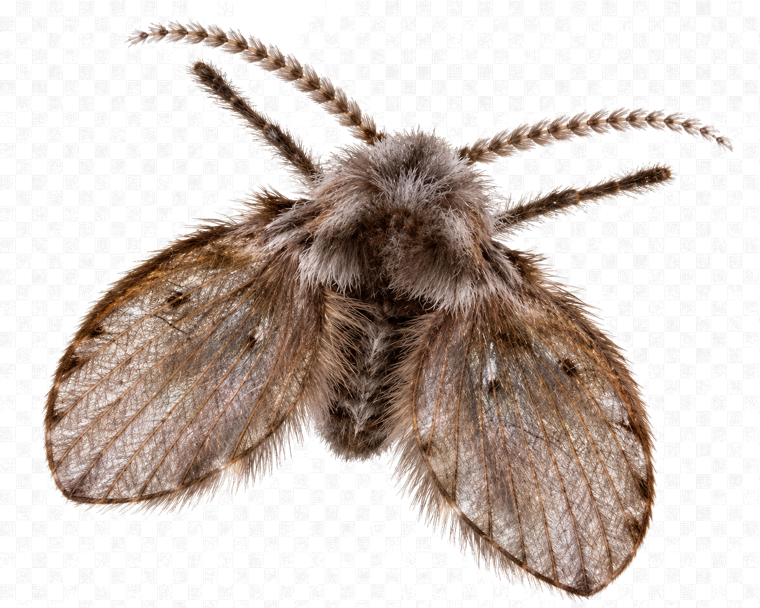
Drain / Moth Fly
family Psychodidae
Identify: Tiny (~&frac1;⁄₁₆ in.), fuzzy and moth-like, with hairy wings held roof-like at rest. A weak flier usually seen walking on walls near drains.
Where it breeds: The decomposing film and scum inside floor drains, sink traps, and garbage disposals — the larvae live right in that gelatinous layer.
Why it matters: Doesn’t bite or spread disease, but it’s the clearest warning sign you have an organic-buildup problem in a drain that needs to be cleaned out.
How We Control Kitchen Flies — At the Source
- Find the breeding source. We inspect every floor drain, sink trap, grease trap, disposal and the voids under equipment — scraping the film from a drain wall and checking it for larvae is how the actual source gets confirmed. There are usually several sources in one kitchen.
- Sanitation & drain maintenance. The organic scum has to physically come out. We work with your team on drain cleaning, degreasing under and behind equipment, grout and cracked-tile buildup, mats, and standing mop water — the damp organic layers flies lay eggs in.
- Bio-enzyme floor & drain treatments. On a regular schedule we apply bacterial/enzyme products to drains, floor drains, grout lines and equipment bases. The enzymes break down grease and food residue and the beneficial bacteria digest it — progressively eating away the very film the flies breed in. Because it removes the breeding medium instead of just killing adults, it gives lasting suppression when used consistently; foaming formulas are used to coat drain walls where liquids run straight through.
- Bio-enzyme drain treatment + IGR. Where flies are active we pair the enzyme treatment with an insect growth regulator. The IGR settles into the drain film where the eggs and larvae are and stops them from maturing into adults — so even the larvae already in the drain never emerge. Enzyme shrinks the breeding site; the IGR breaks the reproductive cycle. Together they attack the problem, not just the symptom.
- Adult knockdown & exclusion (support). Once the source is handled we clean up the remaining adults with targeted treatments, insect light traps, air curtains at constantly open doors, and tight door/window screening — all supplements to source removal, never a substitute for it.
Fly biology and the “eliminate the breeding site” principle per Truman’s Scientific Guide to Pest Management Operations, Ch. 14. Bio-enzyme and IGR drain-program details reflect current commercial-kitchen practice and product labels.
Keep Your Kitchen Clean and Your Doors Open
Free quotes. Custom IPM programs. Same-day emergency service. Serving St. Louis restaurants for over 20 years.